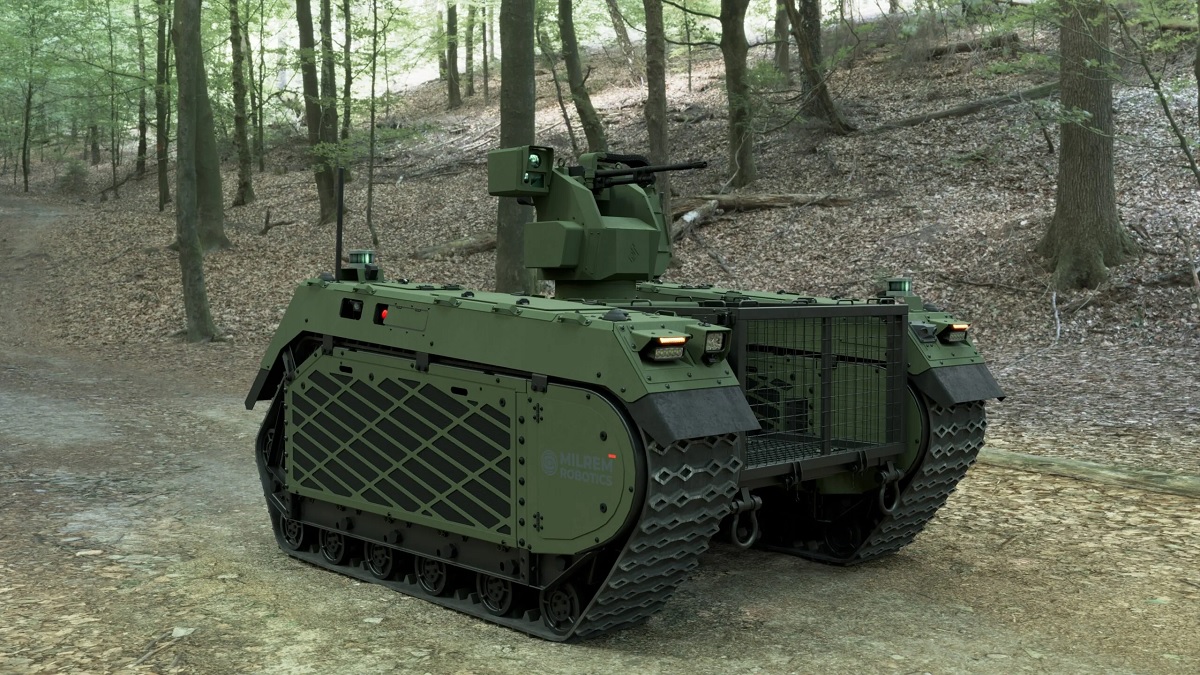
What Kind of Weapon Disables Robots? Real-World Technologies Used to Stop Robotic Systems
Robots are becoming more advanced every year, being used in industries like manufacturing, security, defense, and even exploration. As their presence grows, so does curiosity about how they can be controlled, stopped, or disabled when needed.
The question what kind of weapon disables robot often appears in discussions about robotics, science fiction, and real-world military or security systems. People want to understand whether robots can actually be stopped using physical force, electronic disruption, or other specialized methods.
In reality, disabling a robot depends heavily on its design, purpose, and level of protection. Some systems rely on mechanical components, while others depend on complex electronics and software, which can respond differently to external interference or damage.
Exploring this topic helps separate fiction from reality and gives a clearer understanding of how robotic systems function and what limitations they actually have in practical environments today.
What Does It Mean to Disable a Robot
Disabling a robot refers to stopping it from functioning normally by interfering with its power supply, mechanical systems, sensors, or software operations. Unlike simply turning a device off, disabling often implies disrupting its ability to perform tasks or respond to commands. Depending on the robot’s design, this can involve physical damage, electronic interference, or software-level failure that prevents it from operating as intended in its environment.
Mechanical Failure and Physical Disruption
One of the most straightforward ways a robot can be disabled is through mechanical failure or physical disruption. Robots rely on moving parts such as motors, joints, gears, and actuators to perform tasks. If these components are damaged or obstructed, the robot may lose mobility or become completely non-functional. Even a small structural failure in a critical joint or motor system can stop its operation.
In industrial robots, for example, heavy-duty arms depend on precise calibration and strong mechanical integrity. If alignment is disrupted or components are physically damaged, the system may shut down automatically to prevent further harm. Similarly, mobile robots that rely on wheels or tracks can be rendered immobile if their movement systems are blocked or broken.
Physical disruption does not always mean destruction. In many cases, simple obstruction, misalignment, or forced overload can be enough to stop a robot from performing its intended function. This makes mechanical integrity one of the most important aspects of robotic reliability and safety.
Overall, mechanical failure is a direct and often irreversible way to disable robotic systems, especially in environments where heavy physical workloads are involved.
Electronic Interference and System Shutdown
Robots depend heavily on electronic systems, including sensors, control boards, and communication modules. Disabling a robot through electronic interference involves disrupting these systems so that the robot cannot process data or execute commands correctly. This can result in errors, shutdowns, or unpredictable behavior depending on how the system is affected.
Power disruption is one of the most basic forms of electronic failure. Without electricity, a robot cannot function at all. However, more advanced systems may include backup power sources or fail-safe modes that allow partial operation or controlled shutdown. In such cases, disabling becomes more complex and may require targeting multiple systems simultaneously.
Sensor interference is another critical factor. Robots rely on sensors to understand their environment, and when these inputs are disrupted, the system may become unable to navigate or perform tasks safely. This can trigger automatic safety protocols that halt operations to prevent damage or accidents.
Because modern robots are highly integrated systems, electronic disruption can have widespread effects, making it one of the most important areas when discussing how robotic functionality can be interrupted or disabled.
Electronic Warfare Weapons Against Robots
Electronic warfare refers to the use of electromagnetic energy to disrupt, disable, or manipulate electronic systems, including robotic platforms. As robots become more dependent on sensors, communication links, and software-driven controls, they also become more vulnerable to electronic interference. Understanding how these systems work helps explain why electronic warfare is considered a key method of countering advanced robotic technology in both military and security environments.
Jamming Communication and Control Signals
One of the primary methods used in electronic warfare against robots is signal jamming, which targets the communication links between a robot and its operator or control system. Many modern robots rely on wireless signals, GPS data, or remote command networks to function effectively. When these signals are disrupted, the robot may lose coordination, fail to receive instructions, or switch into a limited emergency mode.
Jamming devices work by broadcasting strong electromagnetic noise on the same frequency bands used by robotic communication systems. This overwhelms the receiver and prevents it from distinguishing legitimate signals from interference. As a result, the robot may become unresponsive or behave unpredictably depending on its built-in safety protocols.
In some cases, advanced robots are designed with anti-jamming features, such as signal encryption or autonomous fallback modes. However, even these systems can be degraded under strong or sustained interference. The effectiveness of jamming depends on distance, power output, and the sophistication of the target system.
Overall, communication disruption remains one of the most widely recognized electronic warfare techniques used to limit robotic functionality in real-world scenarios.
GPS Spoofing and Navigation Disruption
GPS spoofing is another powerful electronic warfare technique used against robots that rely on satellite navigation systems. Instead of simply blocking signals, spoofing involves sending false GPS data to mislead the robot about its actual location. This can cause navigation errors, route deviation, or complete loss of positional awareness depending on system design.
Many autonomous robots, including drones and ground vehicles, depend heavily on GPS for mapping, path planning, and target tracking. When spoofed signals are introduced, the robot may follow incorrect routes or become disoriented. This can significantly reduce its operational effectiveness, especially in environments that require precise movement.
Some advanced robotic systems attempt to counter spoofing by cross-referencing GPS data with onboard sensors like inertial measurement units or visual navigation systems. However, these backup systems are not always fully reliable under sustained interference, especially in complex environments.
Because of its ability to mislead rather than simply block signals, GPS spoofing is considered a highly effective form of electronic warfare against autonomous robotic systems.
FAQs
What Kind Of Weapon Can Disable A Robot?
A robot can be disabled by different types of systems depending on its design and function. You may see mechanical tools that physically damage or block moving parts, electronic interference systems that disrupt circuits, or software-based attacks that corrupt control systems. Each type targets a different weakness, such as power supply, sensors, or communication links. The effectiveness depends on how advanced the robot is and whether it has backup systems or autonomous fail-safes built into its programming.
Can Electronic Warfare Weapons Disable Robots?
Yes, electronic warfare tools can disable robots by interfering with their communication signals, sensors, or navigation systems. You are essentially disrupting the flow of data that allows the robot to function correctly. Jamming, signal disruption, and GPS interference can cause robots to lose control or enter safety shutdown modes. However, more advanced robots may have encrypted systems or autonomous fallback functions that reduce the impact of these attacks, making them harder to fully disable.
Can Physical Weapons Destroy Or Disable Robots?
Physical force can disable robots by damaging their mechanical structure, motors, or joints. You may stop a robot from functioning by breaking key components that allow movement or stability. Even non-destructive obstruction can be enough to halt operations in some cases. However, heavily armored or industrial-grade robots may require significant force to disable, depending on their build quality and protective casing.
Can Software Attacks Disable A Robot?
Software attacks can disable robots by targeting their operating systems or control programs. You may disrupt instructions, corrupt data, or overload processing systems, causing the robot to malfunction or shut down. Many modern robots rely heavily on software, making them vulnerable to cyber interference. However, secure systems often use encryption and security layers that make direct software-based disabling more difficult without advanced access.
Are Drones And Robots Disabled In The Same Way?
Drones and ground robots can be disabled in similar ways, but drones are more dependent on wireless communication and GPS signals. You may find that drones are more vulnerable to signal jamming and navigation interference, while ground robots may rely more on physical protection. Both systems share common weaknesses in electronics, but their operating environments determine which disabling method is more effective.
What Is The Most Effective Way To Disable A Robot?
The most effective way to disable a robot depends on its purpose and technology level. You may need a combination of physical disruption, electronic interference, and software targeting to fully stop advanced systems. Simpler robots are often disabled through direct mechanical damage, while complex autonomous systems require more sophisticated methods. There is no single universal solution because robotic designs vary widely across industries and applications.
Can Modern Robots Be Fully Protected From Being Disabled?
Modern robots are designed with multiple layers of protection, including redundancy systems, encryption, and fail-safe modes. You may find that even if one system is disrupted, the robot can switch to backup operations or safe shutdown procedures. While these protections improve resilience, no system is completely immune to all forms of disruption. The level of protection depends on cost, design complexity, and intended use in real-world environments.
Conclusion
In modern discussions about robotics and defense systems, there is no single tool that universally stops all machines. The idea behind what kind of weapon disables robot depends heavily on the robot’s design, power source, and control system. Some are vulnerable to electronic disruption, while others require physical damage to be neutralized.
Electronic warfare tools like signal jammers, cyber intrusion methods, and electromagnetic interference can interrupt communication and control systems. In other cases, physical force or specialized countermeasures may be required to stop movement or destroy critical components. Each method has different levels of effectiveness depending on the situation.
Overall, understanding what kind of weapon disables robot highlights how diverse and advanced both robotics and counter-robot technologies have become. As robots continue to evolve, so will the systems designed to control or disable them, making this an ongoing area of technological development and security research.