What Is M193 Ammo? A Complete Guide to 5.56×45 NATO Ball Ammunition
Modern rifle ammunition used in AR-15 platforms has several variants designed for speed, accuracy, and penetration. Among them, the 5.56×45mm NATO family includes a widely recognized standard load known for its lightweight projectile and high-velocity performance.
This cartridge is often discussed in military training and civilian shooting circles, and understanding what is m193 ammo helps you recognize its role as a traditional full metal jacket round developed for the 5.56 NATO system.
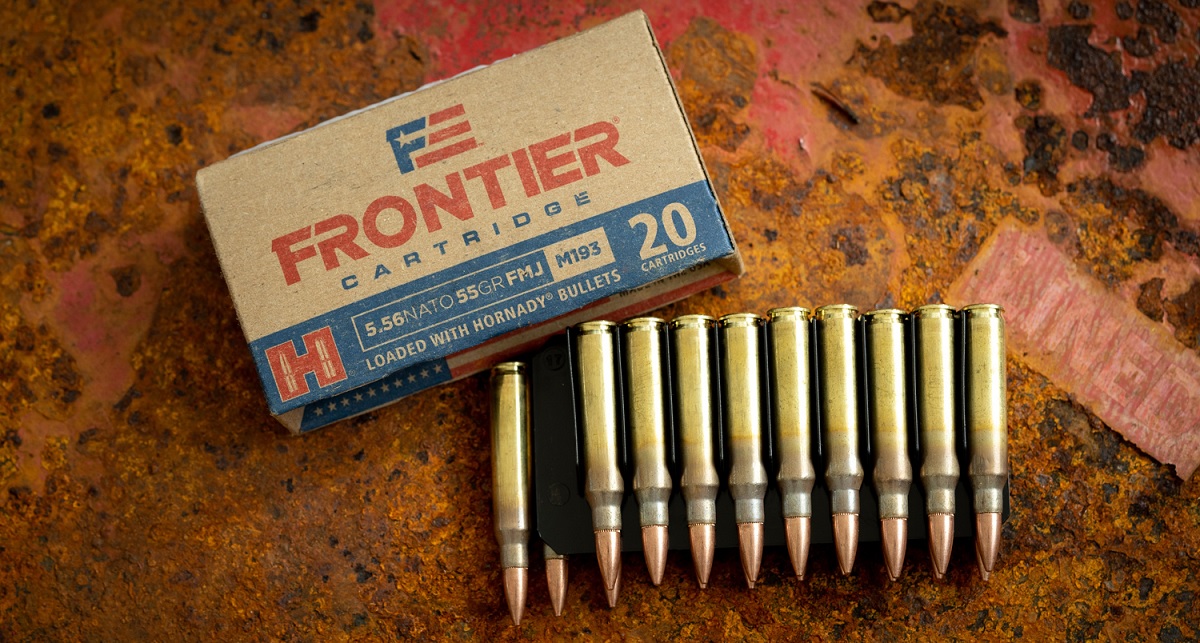
M193 is typically a 55-grain full metal jacket bullet known for achieving high muzzle velocity from standard barrel lengths. It is commonly used in range practice, training environments, and general-purpose shooting where reliable feeding and consistent trajectory are important factors.
It is often valued for its straightforward design and predictable performance, making it a common reference point when discussing standard 5.56 ammunition types used across both military history and civilian firearms applications.
What Is M193 Ammo?
M193 ammo is a standard 5.56×45mm NATO cartridge that has been widely used in military training and civilian shooting applications for decades. It is best known for its 55-grain full metal jacket bullet designed for high velocity and reliable feeding in semi-automatic and automatic rifles. Understanding what makes this ammunition unique helps you see why it remains a benchmark for basic 5.56 performance.
Design, Specifications, and Core Characteristics of M193 Ammo
M193 ammunition is built around a simple but effective design that focuses on speed and consistency. It typically features a 55-grain full metal jacket projectile seated in a brass case, loaded to achieve high muzzle velocity from standard rifle barrels. This design was originally developed for military use, where dependable feeding, flat trajectory, and ease of mass production were essential requirements.
The bullet’s lightweight construction allows it to reach high speeds, often exceeding 3,000 feet per second depending on barrel length. This velocity contributes to a relatively flat shooting path at moderate distances, making it suitable for training and general target shooting. However, its performance is also influenced by barrel twist rates and environmental conditions, which can slightly affect accuracy and stability over longer ranges.
Another defining feature of M193 is its simplicity compared to modern specialized loads. It does not include advanced bonding, hollow-point expansion, or armor-piercing enhancements. Instead, it prioritizes consistent ballistic behavior and affordability, which is why it continues to be widely manufactured and used today.
Performance, Use Cases, and Practical Applications of M193 Ammo
In practical use, M193 ammo is commonly chosen for range training, recreational shooting, and basic marksmanship practice. Its predictable recoil and straightforward ballistics make it easy for shooters to learn fundamentals such as trigger control, sight alignment, and follow-through. Many shooters prefer it for high-volume practice due to its relatively lower cost compared to premium defensive ammunition.
The high velocity of M193 can also create notable terminal effects at close range, especially when fired from longer barrels. This characteristic has historically contributed to its effectiveness in military service rifles. However, its performance can vary depending on target distance and barrier penetration, since it is not designed for specialized expansion or deep penetration through hard materials.
For civilian users, M193 remains a reliable choice for general shooting tasks where consistency matters more than specialized performance. It cycles well in most AR-15 style platforms and is widely available in the commercial market. This makes it a go-to option for shooters who want dependable ammunition without the complexity or cost of advanced load types.
M193 Ammo Specifications
M193 ammo specifications are based on a standardized 5.56×45mm NATO cartridge design that focuses on simplicity, speed, and consistent performance. It is commonly recognized for its 55-grain full metal jacket projectile, brass casing, and high-velocity output. These specifications make it one of the most widely referenced military-style training rounds, offering predictable ballistics and reliable cycling in compatible rifles such as AR-15 platforms.
Bullet Weight, Velocity, and Ballistic Performance Details
The core specification of M193 ammo is its 55-grain full metal jacket bullet, designed to maintain stability at high speeds. This lightweight projectile allows the round to achieve impressive muzzle velocities, often ranging between 3,100 and 3,250 feet per second depending on barrel length. The high speed contributes to a flat trajectory, making it effective for mid-range shooting and training exercises.
This cartridge performs best when fired from barrels with appropriate twist rates, typically 1:12 or similar configurations. The lighter bullet is optimized for these slower twist barrels, which help maintain stability in flight. When used correctly, M193 delivers consistent accuracy at standard engagement distances, although its performance can vary at extended ranges where wind drift becomes more noticeable due to its lighter weight.
Energy transfer is another key aspect of its specification profile. At close to medium range, the high velocity generates significant kinetic energy upon impact. However, because it is a full metal jacket design, it does not expand like hollow-point ammunition. Instead, it relies on velocity and yaw behavior for its terminal characteristics.
Case Design, Pressure Ratings, and Primer Construction
M193 ammo uses a standard brass cartridge case designed for durability and smooth feeding in semi-automatic and automatic firearms. Brass is chosen for its ability to expand and seal the chamber during firing, then contract slightly for easy extraction. This makes it highly reliable in rapid-fire and training environments where consistent cycling is critical.
The cartridge operates at pressures consistent with 5.56 NATO specifications, which are generally higher than commercial .223 Remington loads. This pressure level contributes to its increased velocity and performance consistency across different firearm platforms. Shooters are typically advised to ensure their rifles are rated for 5.56 NATO before using M193 ammunition regularly.
Primer construction in M193 is typically Boxer-primed, allowing for reliable ignition and ease of manufacturing in commercial production. The primer is seated to withstand repeated handling and feeding in magazines without degradation. Combined with its brass case and uniform powder charge, this ensures dependable ignition and consistent internal ballistics across large production batches.
Ballistics and Performance of M193
The ballistics and performance of M193 ammo are defined by its high-velocity 55-grain full metal jacket projectile, which delivers a flat trajectory and reliable mid-range accuracy. Its design emphasizes speed and consistency, making it suitable for training, target shooting, and general-purpose use in 5.56×45mm NATO platforms. Performance varies depending on barrel length, twist rate, and environmental conditions, but it remains a widely referenced baseline for standard rifle ballistics.
Velocity, Trajectory, and Effective Range
M193 ammo is known for its high muzzle velocity, typically exceeding 3,100 feet per second when fired from standard 20-inch barrels. This speed contributes to a relatively flat trajectory, reducing bullet drop at common engagement distances. Shooters often find it easier to maintain accuracy at 100 to 300 yards due to this predictable flight path.
The lightweight 55-grain bullet allows the cartridge to achieve rapid acceleration, which enhances its performance in shorter to mid-length barrels as well. However, velocity loss becomes more noticeable as distance increases, especially beyond 300 yards. This affects both drop and wind drift, requiring more adjustment from the shooter.
Effective range for consistent accuracy generally falls within 500 yards under optimal conditions. Beyond that, external factors like wind and air resistance begin to significantly influence bullet stability. Despite this, the round remains popular for range use due to its straightforward ballistic profile.
Barrel twist rate also plays a role in performance. A 1:12 twist is traditionally ideal, helping stabilize the lighter projectile efficiently. In modern rifles with faster twist rates, M193 still performs well but may exhibit slight differences in long-range grouping.
Terminal Effects and Real-World Shooting Behavior
The terminal performance of M193 is largely driven by its high velocity rather than projectile expansion. Upon impact at close to intermediate ranges, the bullet can yaw and fragment, especially when it strikes soft tissue or similar mediums. This behavior is a result of its full metal jacket construction combined with high-speed impact energy.
At closer distances, typically under 100 yards, the round can produce more pronounced fragmentation effects due to retaining higher velocity. This increases energy transfer on impact, making it more effective in those ranges compared to slower loads. However, as velocity decreases over distance, this fragmentation potential reduces significantly.
In real-world shooting applications, this means performance is highly distance-dependent. The bullet’s behavior changes as it slows, transitioning from fragmentation potential to more stable, non-expanding penetration. This variability is an important factor in understanding how the round performs across different scenarios.
Shooters often consider these characteristics when selecting M193 for training or general use. Its predictable behavior at short range and reduced complexity make it practical for volume shooting, while its limitations at extended distances highlight the trade-offs of a lightweight, high-velocity design.
Common Uses of M193 Ammo
M193 ammo is widely used due to its balance of affordability, reliability, and consistent performance in 5.56×45mm NATO platforms. Its lightweight 55-grain full metal jacket design makes it suitable for a variety of shooting activities. From training new shooters to serving in military-style practice environments, it remains a practical option for high-volume use and general-purpose rifle shooting.
Training, Target Practice, and Skill Development Applications
One of the most common uses of M193 ammo is training and target practice. Its predictable recoil and flat trajectory make it ideal for shooters who are developing fundamental skills such as sight alignment, trigger control, and breathing techniques. Because it cycles reliably in most AR-15 style rifles, it is frequently used in both beginner and advanced training sessions.
High-volume shooting is another reason M193 is popular among range users. Its relatively lower cost compared to premium defensive ammunition allows shooters to practice more frequently without significantly increasing expenses. This makes it a preferred choice for marksmanship drills, zeroing optics, and practicing different shooting positions over extended sessions.
The consistency of M193 also helps shooters understand basic ballistic behavior. Since it does not include specialized expanding or match-grade features, it provides a straightforward shooting experience. This simplicity allows users to focus more on technique rather than compensating for complex ammunition performance variations.
Recreational Shooting, Competition, and General Use Cases
Beyond training, M193 ammo is commonly used in recreational shooting activities. Many firearm enthusiasts choose it for informal range sessions where reliability and ease of use matter more than precision long-range performance. Its smooth cycling and manageable recoil make it enjoyable for extended shooting sessions.
In some shooting competitions, especially those focused on practical rifle skills, M193 can also be used effectively. While it is not a dedicated match-grade round, it still delivers sufficient accuracy for short to mid-range stages. Competitors often rely on its consistency for drills involving speed, target transitions, and controlled shooting under time constraints.
Another important use case is zeroing optics and iron sights. Because M193 provides a stable and repeatable ballistic pattern at common engagement distances, it is frequently used to set up rifles before switching to other ammunition types. This helps ensure that firearms are properly calibrated for general shooting conditions.
Legal Status of M193 Ammos
The legal status of M193 ammo varies depending on country, jurisdiction, and intended use, but it is generally classified as standard rifle ammunition in the 5.56×45mm NATO category. In most regions where civilian firearm ownership is permitted, it is legal to purchase and use for sporting, training, and recreational shooting purposes. However, regulations may apply to storage, transportation, and purchase conditions depending on local firearm laws.
United States and International Regulations on M193 Ammo
In the United States, M193 ammo is legal for civilian use in most states where firearms ownership is permitted. It is classified as standard rifle ammunition and is widely available through licensed dealers and sporting goods retailers. There are typically no federal restrictions on ownership, but state laws may regulate shipping, magazine capacity, or storage requirements depending on local legislation.
Internationally, the legal status of M193 varies more significantly. In some countries, civilian access to military-style ammunition is heavily restricted or completely prohibited. Nations with strict firearm control laws may limit ownership to law enforcement or military use only, while others allow it under licensed sporting conditions. Import regulations also play a major role in availability across different regions.
Because M193 is part of the NATO standard 5.56×45mm family, it is commonly manufactured in many countries, but export and import laws can affect its distribution. Even where legal, international shipping often requires compliance with strict customs and defense-related regulations, which can limit consumer access.
Overall, its legality is closely tied to broader firearm policies rather than the ammunition type itself, meaning it is generally lawful in permissive jurisdictions but restricted in countries with tighter arms control frameworks.
Civilian Ownership, Purchase Rules, and Compliance Factors
For civilian shooters, M193 ammo is typically easy to purchase where firearm ownership is allowed. It is commonly sold in bulk quantities, making it a popular choice for range practice and training. Buyers usually must comply with age restrictions, which in many regions require purchasers to be at least 18 or 21 years old depending on local laws.
Retail purchase may also involve background checks in certain jurisdictions, especially when buying from licensed firearms dealers. However, in many U.S. states, ammunition can be purchased without extensive paperwork, aside from age verification and compliance with state-specific regulations. Online purchases may also require shipping restrictions or in-person delivery transfers depending on the state.
Storage and transportation laws can also influence how civilians handle M193 ammo. Some regions require secure storage to prevent unauthorized access, while others regulate how ammunition can be transported in vehicles. These rules are designed to ensure safety and compliance rather than restrict typical recreational use.
In practice, responsible ownership and adherence to local regulations are the key factors that determine how civilians legally use M193 ammo, making it accessible in many regions while still subject to important legal boundaries.
FAQs
What Is M193 Ammo?
M193 ammo is a 5.56×45mm NATO standard military cartridge that was originally developed for U.S. service rifles like the M16. When you use this round, you are typically firing a 55-grain full metal jacket bullet designed for high velocity and consistent performance. It gained popularity during the Vietnam War era and is still widely used today in civilian AR-15 platforms. Its main design focus is speed and fragmentation rather than heavy penetration or expansion.
Is M193 Ammo The Same As 5.56 NATO Or .223 Remington?
M193 is a type of 5.56 NATO ammunition, but it is not identical to all .223 Remington rounds. When you compare it to .223, M193 usually operates at higher pressure and velocity, making it closer to military 5.56 specifications. Most rifles chambered for 5.56 NATO can safely fire M193 without issue. However, if your firearm is marked only for .223 Remington, you should confirm manufacturer guidelines before using it to ensure safe operation.
What Is The Bullet Weight And Construction Of M193 Ammo?
M193 ammo uses a 55-grain full metal jacket bullet with a lead core and copper jacket. When you fire it, you get a lightweight projectile designed for speed and flat trajectory. The FMJ design means it does not expand like hollow point ammunition. Instead, it maintains shape until it may fragment at higher velocities on impact. This construction makes it ideal for training, range shooting, and general-purpose use in rifles like the AR-15.
How Does M193 Ammo Perform Ballistically?
M193 is known for its high velocity and relatively flat trajectory, especially when fired from standard barrel lengths. You can expect speeds around 3,000 to 3,200 feet per second depending on the rifle. At closer distances, the bullet can fragment upon impact, which increases its effectiveness in soft targets. However, as distance increases and velocity drops, the fragmentation effect becomes less reliable. This means performance is strongest at close to mid-range engagements.
Is M193 Ammo Good For Self-Defense Use?
M193 can be used for self-defense, but you need to understand its behavior. When you use it at close range, its high velocity may cause fragmentation, which can increase stopping power. However, because it is a full metal jacket round, it may also over-penetrate depending on barriers and environment. Many shooters prefer specialized defensive ammunition for more predictable expansion. Still, in a rifle platform, M193 remains a capable option if used with proper awareness.
What Rifles Can Fire M193 Ammo Safely?
You can safely use M193 ammo in rifles chambered for 5.56 NATO or .223 Wylde barrels, which are common in AR-15 style platforms. These firearms are designed to handle the pressure levels of military-grade ammunition. If your rifle is marked only .223 Remington, you should check the manufacturer’s specifications before using M193. Some .223-only chambers may not be rated for higher pressure loads, so compatibility should always be confirmed for safety.
Why Is M193 Ammo Still Popular Today?
M193 remains popular because it offers a strong balance of cost, availability, and performance. When you choose this ammo, you get a reliable round that performs well in training and general shooting applications. Its lightweight design and high velocity make it effective for range use and practice with AR-15 platforms. Even with newer ammunition types available, M193 continues to be widely used because it is affordable, simple, and consistently performs well in standard rifles.
Final Words
In summary, this widely used 5.56×45mm NATO cartridge is built around a simple 55-grain full metal jacket design that prioritizes speed, reliability, and consistent performance. Its high-velocity characteristics and straightforward construction make it a long-standing standard for training, practice, and general rifle use across both military and civilian shooting environments.
When you understand What Is M193 Ammo?, it becomes clear why it remains so popular among AR-15 platform users. Its flat trajectory, dependable cycling, and affordability make it a practical choice for high-volume shooting, even though it lacks specialized expansion or long-range match-grade features.
Overall, this ammunition continues to serve as a baseline reference in the 5.56 category, offering predictable behavior and easy handling for a wide range of shooting applications.