What Ammo Does an AR15 Use? A Clear Guide to Caliber, Compatibility & Selection
Choosing the right ammunition for your rifle starts with understanding its chambering and intended use. For many AR-15 owners, ammunition selection can seem confusing because the platform is available in several different configurations and calibers. Knowing the correct cartridge is essential for safe and reliable operation.
The question of what ammo does an ar15 use depends on the specific AR-15 model and the caliber marked on the firearm. The traditional AR-15 is commonly associated with 5.56 NATO and .223 Remington, but modern versions can be chambered for other cartridges as well.
Understanding the difference between these cartridges, along with the markings on your rifle, helps you identify compatible ammunition more confidently. It also prevents the common mistake of assuming every AR-15 uses the same type of ammo.
This guide explains the common ammunition choices associated with AR-15 rifles, how caliber markings relate to ammunition, and what you should check before selecting a cartridge. Always follow the firearm manufacturer’s specifications and applicable safety guidance when handling ammunition.
What Ammo Does an AR15 Use?
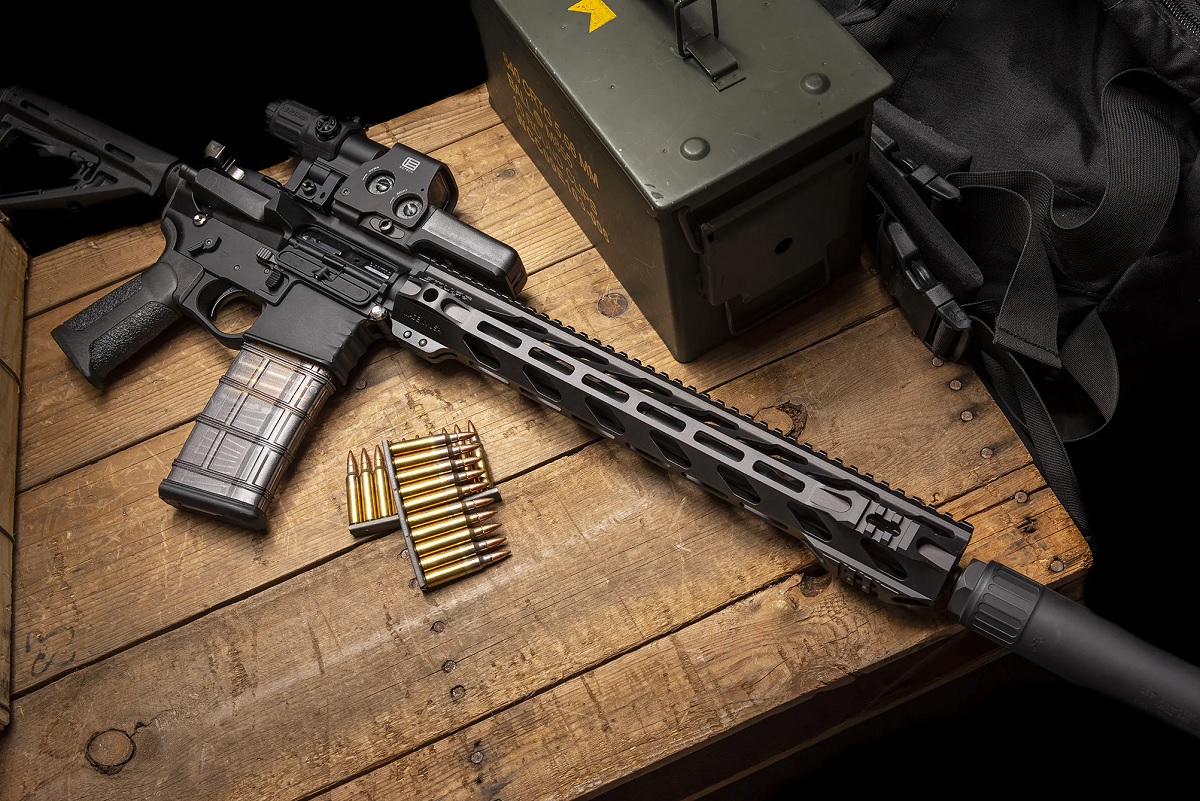
The ammunition used by an AR-15 depends on the specific chambering of the rifle. While many AR-15 rifles are chambered for 5.56 NATO or .223 Remington, the platform is also available in numerous other calibers. Because of this variety, you should never assume that one type of ammunition fits every AR-15. Always check the firearm’s markings and manufacturer documentation before selecting ammunition.
5.56 NATO And .223 Remington
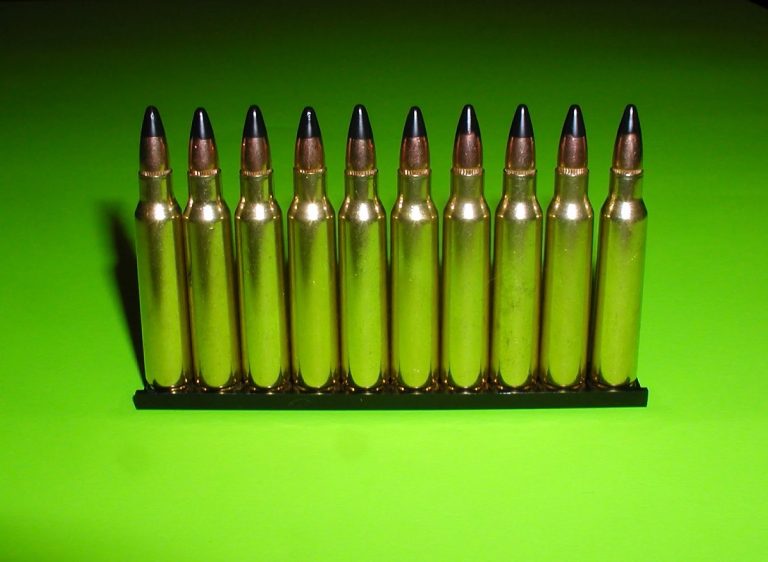
The most commonly associated cartridges with the traditional AR-15 platform are 5.56 NATO and .223 Remington. These cartridges are closely related in physical dimensions, but their specifications and pressure standards are not identical. The exact chambering marked on a particular rifle is therefore important when determining appropriate ammunition.
You may see markings such as 5.56 NATO, .223 Remington, or another designation on the firearm. These markings are more reliable than identifying ammunition based only on appearance. Ammunition packaging also provides cartridge information that should be compared with the firearm manufacturer’s specifications.
Why AR15 Caliber Markings Matter
AR-15 rifles are not limited to a single caliber. Manufacturers produce versions chambered for a wide range of cartridges, so two rifles that look almost identical externally may require completely different ammunition. The caliber marking on the firearm identifies the chamber specification and should be treated as the primary reference.
Before purchasing ammunition, consult the owner’s manual or manufacturer’s information for the exact model. Avoid relying on assumptions based on the rifle’s magazine, appearance, or another AR-15 you have seen. Proper identification is especially important because ammunition that appears similar can have different specifications.
Other Calibers Used In AR15 Platforms
Modern AR-15-style rifles are available in numerous chamberings beyond the familiar .223 Remington and 5.56 NATO. Depending on the manufacturer and configuration, examples can include .300 Blackout, 6.5 Grendel, and 6mm ARC. These cartridges are not interchangeable simply because they may be used in rifles based on the same general platform.
This variety is one reason the term AR-15 does not identify a single ammunition type. The rifle’s specific chambering determines the appropriate cartridge. Manufacturer documentation should always be consulted when identifying the correct ammunition for a particular firearm.
How To Confirm The Correct Ammunition
The safest way to determine ammunition compatibility is to check the caliber or chamber designation marked on the firearm and confirm it against the manufacturer’s documentation. You should also examine the ammunition box carefully to verify that its cartridge designation corresponds with the firearm’s specifications.
Avoid using ammunition based solely on recommendations from another firearm owner or because it appears physically similar to another cartridge. When the markings are unclear, damaged, or inconsistent with the available documentation, consult the firearm manufacturer or a qualified firearms professional rather than guessing.
What Is The Most Common AR-15 Ammo?
Among AR-15 rifles, 5.56 NATO and .223 Remington are the ammunition types most commonly associated with the platform. Their widespread availability and long-standing use have made them familiar choices for many AR-15 owners. However, the exact ammunition a particular rifle requires depends on its chamber specification. Checking the markings on the firearm and the manufacturer’s documentation remains important before selecting ammunition.
5.56 NATO Is A Common AR-15 Chambering
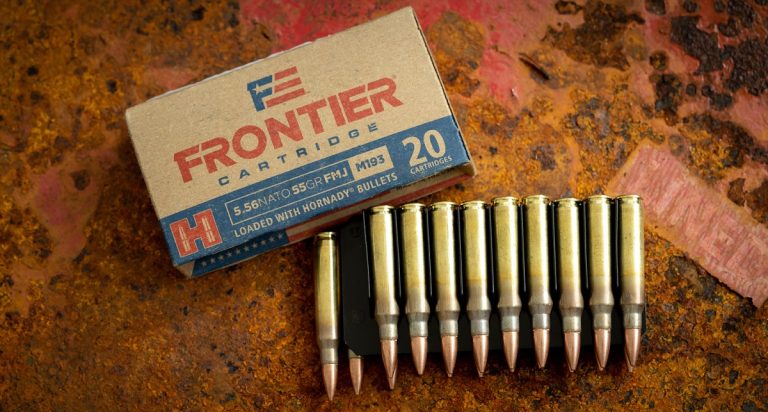
5.56 NATO is one of the most widely recognized chamberings associated with the AR-15 platform. Many rifles are manufactured with chambers designed specifically around this cartridge, making it common in sporting, training, and general civilian firearm markets. Ammunition boxes normally identify the cartridge clearly, allowing you to compare the designation with the markings on your rifle.
The term 5.56 NATO refers to a standardized military cartridge specification. Although it shares dimensions with .223 Remington in several important respects, the cartridges have differences in pressure specifications and chamber standards. For that reason, identifying the exact chamber marking on an AR-15 is more important than simply assuming that all rifles use the same ammunition.
.223 Remington Is Also Widely Available
.223 Remington is another very common cartridge associated with AR-15-style rifles. It has been available commercially for decades and is offered by numerous ammunition manufacturers. Many AR-15 variants are specifically chambered for .223 Remington, while others use chambers designed for 5.56 NATO or another cartridge.
The cartridge designation should always be checked against the firearm’s specifications. An AR-15 chambered specifically for .223 Remington should be treated according to the manufacturer’s stated ammunition requirements. Looking at the caliber marking and consulting the owner’s manual provides a more dependable answer than relying on the rifle’s appearance or the type of ammunition commonly used by other people.
5.56 NATO And .223 Remington Are Not Identical
Although 5.56 NATO and .223 Remington have similar dimensions and are frequently discussed together, they are not simply two names for exactly the same cartridge specification. Their pressure standards and chamber specifications differ, which makes the distinction important when identifying ammunition compatibility.
You may encounter both types of ammunition when shopping for cartridges associated with the AR-15 platform. The correct choice depends on the chambering specified by the firearm manufacturer. Checking the barrel marking, owner’s manual, or official manufacturer information can help establish the appropriate cartridge designation without relying on assumptions.
Other AR-15 Ammunition Options
The AR-15 platform has expanded considerably beyond its traditional chamberings. Depending on the specific firearm, you may encounter cartridges such as .300 Blackout, 6.5 Grendel, 6mm ARC, and other commercially available options. These variations demonstrate why the phrase most common AR-15 ammo does not necessarily identify ammunition suitable for every AR-15.
Different chamberings can require different barrels, magazines, and other components. A rifle designed around one cartridge should not be assumed to accept another simply because both firearms have a similar AR-15-style appearance. The firearm’s caliber marking and manufacturer’s documentation provide the appropriate reference for identifying its chambering.
Can An AR-15 Shoot .223 Remington And 5.56 NATO?
Whether an AR-15 can use .223 Remington, 5.56 NATO, or both depends on the firearm’s specific chambering. Although these cartridges are closely related and share similar dimensions, they are not identical specifications. The markings on the firearm, barrel, or manufacturer documentation should be used to determine compatible ammunition rather than assuming that every AR-15 accepts both cartridges.
Understanding The Difference Between .223 And 5.56
.223 Remington and 5.56 NATO are two closely related cartridges that are commonly associated with AR-15-style rifles. Their external dimensions are similar, which is why they are often discussed together. However, differences exist in their pressure specifications and chamber standards.
The distinction matters because ammunition compatibility depends on how a firearm was designed and manufactured. An AR-15 chambered specifically for one cartridge should be identified according to the manufacturer’s specifications. The cartridge name printed on ammunition packaging should also be checked carefully rather than relying on its appearance.
Why The Chamber Specification Matters
The chamber is the portion of the firearm designed to contain the cartridge before firing, and its specifications determine what ammunition the firearm is designed to accept. AR-15 rifles can have different chamber specifications even when they look almost identical externally.
For this reason, the caliber or chamber marking on the firearm is an important reference point. You may find markings such as .223 Remington or 5.56 NATO on different AR-15 variants. Some firearms are manufactured with chambers designed to accommodate both specifications, while others have more specific requirements.
How To Identify Your AR-15 Chambering
The safest way to determine whether a particular AR-15 is designed for .223 Remington, 5.56 NATO, or another cartridge is to check the firearm itself and consult its manufacturer’s documentation. Caliber markings are commonly found on the barrel or another designated area of the firearm.
The owner’s manual can provide additional information about the manufacturer’s ammunition specifications. When markings are unclear, damaged, or difficult to interpret, contacting the manufacturer or asking a qualified firearms professional is preferable to making an assumption. Ammunition should never be selected solely because it appears similar to another cartridge.
Can Every AR-15 Use Both Cartridges?
Not every AR-15 should automatically be considered compatible with both .223 Remington and 5.56 NATO. The AR-15 is a platform available in numerous chamberings, and rifles that look similar can have different specifications. Therefore, the firearm’s exact chamber designation remains the determining factor.
Some AR-15 configurations are designed around 5.56 NATO and may also have specifications that accommodate .223 Remington, while other configurations have more restrictive chambering requirements. Manufacturer guidance takes priority over general claims about the AR-15 platform. Checking the exact model and chamber designation helps prevent ammunition-selection mistakes.
What Other Calibers Can An AR-15 Use?
The AR-15 platform is available in far more chamberings than the commonly recognized 5.56 NATO and .223 Remington. Manufacturers offer rifles and upper configurations designed around various cartridges for different applications. Because these chamberings have different dimensions and specifications, an AR-15 should always be identified by its exact caliber marking rather than by the platform name alone.
.300 Blackout
.300 Blackout is one of the most recognizable alternative calibers associated with the AR-15 platform. It was developed around the AR-15 form factor and is available in different ammunition configurations. This cartridge has become popular among firearm enthusiasts because it provides another option within the familiar AR-style platform.
Despite being associated with AR-15 rifles, .300 Blackout is not simply interchangeable with 5.56 NATO or .223 Remington. A firearm must be specifically chambered for the cartridge. Checking the barrel marking, owner’s manual, and manufacturer’s specifications is essential when identifying the appropriate ammunition for a particular rifle.
6.5 Grendel
6.5 Grendel is another cartridge used in AR-15-style rifles. It was developed to provide characteristics different from traditional 5.56 NATO configurations while retaining compatibility with the broader AR-15 platform concept. Rifles chambered for 6.5 Grendel can therefore look very similar to other AR-15 variants despite using a different cartridge.
The important distinction is that the cartridge designation identifies the firearm’s chambering. 6.5 Grendel should not be treated as interchangeable with cartridges such as .223 Remington or 5.56 NATO. Manufacturer specifications should always be consulted when identifying a rifle’s caliber and determining what ammunition designation applies to that specific firearm.
6mm ARC
6mm ARC is a newer cartridge that has also been adopted for AR-15-style platforms. It was designed for use in a compact rifle configuration and has attracted attention among shooting enthusiasts looking for alternatives to more established AR-15 chamberings.
An AR-15 chambered for 6mm ARC is a distinct configuration from one chambered for 5.56 NATO or .223 Remington. The ammunition dimensions and firearm specifications are different. This makes the caliber marking particularly important when identifying a rifle. Ammunition should always correspond to the chamber designation specified by the manufacturer.
7.62x39mm
Some AR-15-style rifles are also manufactured in 7.62x39mm, a cartridge widely recognized from other rifle platforms. This chambering demonstrates the flexibility of the AR-15 design, allowing manufacturers to produce rifles around cartridges with different dimensions and characteristics.
A 7.62x39mm AR-15 is not equivalent to a standard 5.56 NATO AR-15 simply because the rifles share a similar overall design. The chamber, ammunition, and related components are specific to the particular configuration. Checking the firearm’s caliber marking and official documentation is therefore essential before identifying compatible ammunition.
Other AR-15 Chamberings
Beyond these examples, manufacturers have produced AR-15-style rifles in numerous other calibers, including cartridges designed for different sporting and recreational applications. The availability of a particular chambering can vary between manufacturers and firearm models.
This wide range of options means that AR-15 should be understood as a platform rather than a single caliber. A rifle’s exact chamber designation determines its ammunition category. Reading the manufacturer’s markings and owner’s manual provides the most reliable way to identify that chambering, especially when a rifle has been modified or its original configuration is uncertain.
FAQs
What Ammo Does An AR15 Use?
When you ask what ammo does an AR15 use, you should know that an AR-15 can be chambered for several different cartridges. The most common chamberings you may encounter are .223 Remington and 5.56 NATO. However, the exact ammunition you need depends on the chambering marked on your particular firearm.
You should always check the barrel markings, owner’s manual, or manufacturer specifications before selecting ammunition. Never assume that every AR-15 uses the same cartridge. Matching the ammunition to the firearm’s specified chambering helps you avoid compatibility problems and promotes safer handling.
Is 5.56 NATO Commonly Used In An AR15?
Yes, 5.56 NATO is one of the most common chamberings you may find in an AR-15. Many AR-15-style rifles are specifically chambered for 5.56 NATO, while others may use different cartridges.
Before you purchase or use ammunition, you should check the caliber marking on your firearm and compare it with the manufacturer’s specifications. You should not rely only on the appearance of the cartridge because similar-looking ammunition can have different specifications. Following the firearm manufacturer’s guidance is the best way for you to determine which ammunition is appropriate for your particular AR-15.
Can An AR15 Use .223 Remington Ammo?
Some AR-15 rifles are designed to use .223 Remington ammunition, while others have chamber specifications that allow different ammunition. You should therefore identify your firearm’s exact chambering before using .223 Remington.
You can usually find this information marked on the barrel or receiver, or you can check the owner’s manual provided by the manufacturer. You should not assume that .223 Remington is automatically suitable for every AR-15. If the chambering information is unclear, consult the manufacturer or a qualified firearms professional rather than guessing about ammunition compatibility.
Is .223 Remington The Same As 5.56 NATO?
Although .223 Remington and 5.56 NATO cartridges look very similar, you should not automatically consider them identical. They can differ in specifications, including chamber and pressure standards, which is why your firearm’s chambering matters.
When choosing ammunition, you should check the markings on your AR-15 and follow the manufacturer’s instructions. Some firearms are specifically designed around one chambering, while others may have chamber specifications that accommodate particular ammunition combinations. If you are uncertain, you should verify the information with the firearm manufacturer or a qualified professional before using either cartridge.
How Do You Know What Ammo Your AR15 Uses?
You can determine the appropriate ammunition by checking your AR-15’s caliber or chambering markings. These markings are commonly found on the barrel or another visible part of the firearm. Your owner’s manual can also provide the exact information you need.
You should compare the firearm’s marking with the ammunition designation and manufacturer’s recommendations. If the markings are difficult to read or appear inconsistent, avoid guessing. You can contact the manufacturer or ask a qualified firearms professional to help you identify the correct chambering. Taking this step helps you avoid using ammunition that is incompatible with your firearm.
Can All AR15 Rifles Use The Same Ammo?
No, you should not assume that all AR-15 rifles use the same ammunition. The term AR-15 describes a firearm platform, and rifles based on that platform can be chambered for different cartridges.
For example, you may encounter AR-15-style rifles chambered in 5.56 NATO, .223 Remington, .300 Blackout, and other cartridges. Because ammunition compatibility depends on the specific chambering, you should check your rifle’s markings and manufacturer documentation. You should always select ammunition according to the exact specifications for your firearm rather than choosing cartridges simply because they are commonly associated with the AR-15 platform.
What Other Ammo Calibers Can An AR15 Use?
Depending on the specific configuration, you may find AR-15-style firearms chambered for several different cartridges besides the commonly encountered .223 Remington and 5.56 NATO. One example is .300 Blackout, while other configurations may use additional cartridges.
However, you should understand that a different caliber requires a firearm specifically configured and chambered for that cartridge. You should never assume that another cartridge can be used simply because it physically resembles the ammunition your rifle normally uses. Always check the firearm’s chambering, manufacturer documentation, and ammunition specifications before selecting ammunition for your particular AR-15.
What Should You Check Before Buying AR15 Ammo?
Before buying ammunition for your AR-15, you should first identify the exact chambering specified for your firearm. Check the caliber marking and confirm the information using the owner’s manual or manufacturer documentation.
You should also carefully examine the ammunition packaging to ensure its designation matches the firearm’s specified chambering. If you are uncertain about compatibility, do not rely on assumptions based on cartridge appearance or what is commonly used in other AR-15 rifles. Instead, consult the manufacturer or a qualified firearms professional. You should also follow all applicable laws and regulations regarding ammunition in your location.
Final Thoughts
Choosing ammunition for an AR-15 starts with identifying the rifle’s exact chambering. While 5.56 NATO and .223 Remington are among the most common cartridges associated with the platform, AR-15-style rifles are also available in several other calibers. The firearm’s markings should always be treated as the primary reference.
Understanding what ammo does an ar15 use helps you avoid confusing similar-looking cartridges with ammunition that is actually specified for your particular rifle. Caliber markings, the owner’s manual, and manufacturer information can provide important compatibility details.
Because AR-15 configurations vary considerably, it is best to rely on the firearm manufacturer’s specifications rather than general assumptions. When the chambering is unclear, consult the manufacturer or a qualified firearms professional before selecting ammunition.