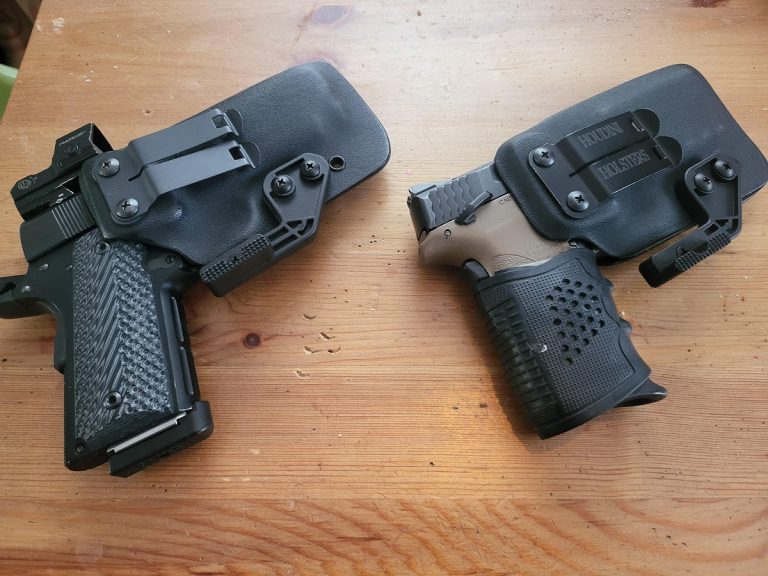
Fattac vs Fat Guy Holster Comparison Guide Which One Fits You Best
Choosing the right concealed carry holster matters more than most people realize. Comfort, retention, and accessibility all play a role in how confidently you carry daily. A poorly designed holster can quickly turn everyday carry into a frustrating experience.
The discussion around fattac vs fat guy holster often comes up among carriers looking for comfort-focused options designed for larger body types. Both holsters aim to solve issues like printing, pressure points, and stability during movement, but they approach these challenges in different ways.
Factors like build quality, adjustability, and concealment depth make a noticeable difference when comparing these two options. Users also pay attention to how well each holster performs during long hours of wear, especially in seated positions or active routines.
This comparison helps new and experienced carriers understand which design better fits their lifestyle and daily carry needs. The right choice often comes down to personal comfort preferences and how discreetly the holster sits under clothing without drawing attention.
Fattac vs Fat Guy Holster Comparison
The debate around Fattac vs Fat Guy Holster continues to grow among concealed carry users who prioritize comfort and reliability. Both holsters are designed with body-friendly concealment in mind, especially for individuals who struggle with traditional inside-the-waistband options. While each brand focuses on improving daily carry experience, their design philosophies differ in structure, flexibility, and how they distribute weight for long-term wear throughout the day.
Comfort and Everyday Carry Fit
Comfort is one of the most important factors when comparing Fattac vs Fat Guy Holster, especially for users who carry for extended hours. The Fat Guy Holster is widely recognized for its emphasis on body contouring, offering a design that reduces pressure points and adapts better to larger midsections. It often provides a more forgiving fit for seated positions and daily movement, making it appealing for all-day wear.
Fattac, on the other hand, focuses on a more rigid structure that enhances stability during movement. It holds the firearm closer to the body, which some users prefer for a more secure feel. However, this firmness can sometimes create mild discomfort during long sitting periods or when bending frequently. Overall, comfort largely depends on body type and how much flexibility a carrier expects from their holster system in real-world use.
Concealment and Printing Control
Concealment plays a major role in the Fattac vs Fat Guy Holster comparison, especially for users concerned about printing under clothing. The Fat Guy Holster is designed to spread pressure more evenly, which can help reduce visible firearm outlines under looser or casual clothing. Its positioning often allows for better concealment for users with larger body frames, particularly when wearing untucked shirts.
Fattac holsters typically prioritize a tighter carry position, keeping the firearm closer to the waistline. This can improve concealment for slimmer builds or those wearing structured clothing, but it may require more careful wardrobe choices to avoid printing. The difference becomes more noticeable when moving, bending, or sitting for long periods, where garment tension can affect how discreet each holster remains.
Retention, Build Quality, and Stability
Retention and build quality are essential factors when evaluating Fattac vs Fat Guy Holster, as both impact safety and confidence during carry. Fattac holsters are often built with a focus on firm retention, ensuring the firearm stays locked in place even during active movement. This structure appeals to users who prioritize security and minimal firearm shifting throughout the day.
The Fat Guy Holster also offers reliable retention but balances it with flexibility to enhance comfort. Its construction typically includes materials that adapt slightly to body movement, reducing pressure without sacrificing safety. While both options are durable, Fattac leans more toward rigidity, whereas Fat Guy Holster prioritizes adaptability for long-term wear in varied daily situations.
Adjustability and Practical Daily Use
Adjustability is another key difference in the Fattac vs Fat Guy Holster discussion, especially for users who fine-tune their carry setup. Fattac holsters usually provide adjustable ride height and cant options, allowing users to customize draw angle and positioning. This makes it suitable for those who prefer a more controlled and fixed carry style with predictable placement.
The Fat Guy Holster, however, focuses on a more adaptive fit system designed to accommodate body movement and comfort shifts throughout the day. Its flexibility in positioning can make it easier for beginners or those transitioning from uncomfortable holsters. While both offer customization, the Fat Guy Holster emphasizes ease of wear, whereas Fattac leans toward precision and structured adjustment.
Brand Background and Design Philosophy
Understanding the brand background and design philosophy behind holsters helps explain why certain models feel more comfortable or perform better in real-world carry situations. Both Fattac and Fat Guy Holster were created with a focus on solving everyday concealed carry challenges. Their approaches differ in how they balance comfort, concealment, durability, and adaptability for different body types and lifestyles.
Fattac Brand Background and Design Approach
Fattac was developed with a strong focus on performance-driven concealed carry needs, emphasizing structure, retention, and consistent firearm positioning. The brand leans toward a more tactical design philosophy, aiming to keep the firearm stable and tightly secured against the body. This approach is especially appealing to users who prioritize reliability and a firm carry feel over maximum flexibility.
The design philosophy behind Fattac centers on control and predictability. Each holster is engineered to maintain a rigid shape, which helps reduce unwanted movement during walking, running, or other physical activity. This structured build supports quicker, more consistent draw mechanics. However, the emphasis on rigidity can sometimes reduce comfort for users who prefer softer adaptation to body contours, especially during long sitting hours or extended daily wear.
Fat Guy Holster Brand Background and Design Approach
Fat Guy Holster was created with a very different priority, focusing on comfort-first concealed carry solutions designed specifically for users who struggle with traditional holster discomfort. The brand emphasizes inclusivity in design, aiming to accommodate larger body types while still maintaining effective concealment and safe firearm retention. This makes it especially popular among everyday carriers who prioritize all-day wearability.
The design philosophy centers on adaptability and pressure distribution rather than rigid structure. Fat Guy Holster products are built to reduce pressure points, improve weight balance, and allow more natural movement throughout the day. Instead of forcing the body to adjust to the holster, the holster is designed to adapt to the user’s shape. This results in a more forgiving carry experience, particularly during sitting, bending, or extended periods of wear.
Design Philosophy Differences in Real-World Use
The contrast between Fattac vs Fat Guy Holster becomes most visible in how each brand interprets the idea of concealed carry comfort and control. Fattac prioritizes a structured, performance-oriented mindset where stability and consistent positioning are key. This makes it suitable for users who want a more locked-in feel and predictable draw under varied conditions.
Fat Guy Holster, however, prioritizes long-term comfort and body adaptability, especially for users who need a more forgiving carry system. Its design philosophy is built around reducing discomfort during extended wear, even if it means sacrificing some rigidity. In practical use, this difference influences how each holster performs during daily activities, clothing choices, and extended concealed carry routines.
Material Quality and Construction
Material quality and construction play a major role in how a concealed carry holster performs over time. Both Fattac and Fat Guy Holster are built with durability and daily usability in mind, but they take different approaches to materials, rigidity, and comfort integration. These differences influence everything from long-term wear resistance to how the holster interacts with clothing and body movement during everyday carry situations.
Fattac Material Build and Structural Design
Fattac holsters are typically constructed using high-strength molded materials designed to maintain a rigid and consistent shape. This rigid construction helps ensure the firearm stays firmly in place without shifting during movement. The emphasis is placed on structural integrity, which allows the holster to support secure retention even during active or high-motion situations.
The outer shell is engineered for durability, often resisting deformation even after extended daily use. This makes it suitable for users who prioritize a firm, locked-in carry experience. The hard-shell construction also supports smoother reholstering, as the holster maintains its exact form under pressure.
Inside the design, attention is given to minimizing unnecessary flex, which helps maintain consistent firearm positioning. While this improves stability, it can reduce adaptability against the body, especially during prolonged sitting or bending. The focus remains on performance-driven structure rather than softness or contour flexibility.
Overall, Fattac’s material approach is centered on strength and predictability. The construction is designed to prioritize safety and firearm control, making it a strong choice for users who value a rigid and dependable holster platform.
Fat Guy Holster Material Composition and Comfort Focus
Fat Guy Holster uses a more comfort-oriented material strategy that emphasizes flexibility and body adaptation. The construction often includes softer, more forgiving components that allow the holster to adjust slightly to the wearer’s shape. This reduces pressure points, especially around the waist and abdomen area.
The materials are selected to distribute weight more evenly, which helps reduce fatigue during long hours of concealed carry. Instead of focusing solely on rigid structure, the design allows controlled movement, making it easier to sit, bend, or drive without discomfort.
Durability is still a key factor, but it is balanced with flexibility. The holster is built to withstand daily use while still maintaining a degree of softness that enhances long-term wearability. This combination is especially useful for users who carry throughout the day in varied environments.
Overall, Fat Guy Holster construction prioritizes comfort-driven engineering. It focuses on creating a balanced experience where the material adapts to the user rather than forcing the user to adapt to the holster’s structure.
Durability and Long-Term Construction Comparison
When comparing Fattac vs Fat Guy Holster in terms of durability and construction, both offer reliable long-term performance but with different priorities. Fattac leans heavily toward rigid durability, meaning it holds its shape extremely well over time. This makes it less prone to wear-related deformation, especially in demanding carry conditions.
Fat Guy Holster, on the other hand, focuses on maintaining performance through adaptive durability. While it may have more flexibility in its structure, it is designed to resist breakdown from repeated movement and daily pressure. The materials are selected to maintain comfort without significantly sacrificing longevity.
In real-world use, Fattac’s construction excels in maintaining consistent form, while Fat Guy Holster performs better in reducing physical strain during extended wear. Both approaches ensure durability, but they serve different user priorities depending on whether structure or comfort is the main concern.
Concealment Performance and Printing Control
Concealment performance is one of the most important factors when evaluating everyday carry holsters, especially for users who want to avoid printing under clothing. Both Fattac and Fat Guy Holster are designed with concealment in mind, but they achieve it through different structural and ergonomic approaches. These differences directly impact visibility, comfort, and confidence during daily movement.
Fattac Concealment Design and Printing Behavior
Fattac holsters are engineered to keep the firearm positioned close to the body, which helps reduce outward bulging in many carry setups. The tight retention system ensures the weapon remains stable and does not shift during walking or light activity. This close-to-body positioning can enhance concealment for users who wear structured clothing or prefer a more compact carry profile.
However, because of the rigid construction, concealment performance can vary depending on body type and clothing choice. In some cases, the firm structure may create sharper outlines under thinner fabrics, especially when bending or sitting. Users often need to adjust ride height and cant carefully to minimize printing in different positions throughout the day.
Despite this, Fattac performs well in controlled environments where consistent positioning is maintained. The holster’s stability helps reduce unexpected movement that could otherwise cause sudden printing. For users who prioritize a tight, performance-oriented carry system, this design offers dependable concealment with predictable behavior.
Fat Guy Holster Concealment Strategy and Body Adaptation
Fat Guy Holster takes a different approach to concealment by focusing on body adaptation rather than rigid positioning. The design is intended to distribute pressure more evenly across the waistline, which helps reduce noticeable printing for users with larger or more rounded body shapes. This creates a smoother silhouette under casual or loose-fitting clothing.
One of the key advantages is how the holster adjusts to natural body movement. When sitting, bending, or walking, the flexible structure helps reduce sharp pressure points that often lead to visible firearm outlines. This makes it particularly effective for all-day concealed carry where movement is constant and unpredictable.
Clothing compatibility is also a strong point, as the holster tends to blend better under a wider range of outfits. While it may not hold the firearm as rigidly as some competitors, the trade-off is improved concealment comfort. This makes it a preferred choice for users who value subtle printing control over a strictly locked-in carry feel.
Real-World Printing Control Comparison
When comparing Fattac vs Fat Guy Holster for printing control, the difference becomes most noticeable in movement-heavy situations. Fattac excels in maintaining a fixed position, which can help reduce printing when standing or moving in straight patterns. However, its rigidity can sometimes make printing more noticeable during sitting or bending.
Fat Guy Holster performs better in dynamic daily environments where body position changes frequently. Its adaptive design helps smooth out transitions between standing, sitting, and walking, reducing the chances of sudden printing shifts. This makes it especially useful for users who spend long hours in varied positions throughout the day.
Ultimately, both holsters manage concealment effectively, but they prioritize different aspects of performance. Fattac leans toward structured concealment stability, while Fat Guy Holster focuses on continuous adaptation to body movement for more forgiving printing control.
Retention System and Security Features
Retention and security features are critical in any concealed carry holster because they directly affect firearm safety and user confidence. Both Fattac and Fat Guy Holster prioritize secure weapon holding, but they achieve retention in different ways. Their designs reflect distinct philosophies, with one focusing on firm mechanical security and the other balancing secure retention with comfortable draw accessibility.
Fattac Retention Mechanism and Security Focus
Fattac holsters are known for their strong and structured retention system that keeps the firearm firmly locked in place. The design typically relies on rigid molding and precise trigger guard engagement to ensure the weapon does not shift or move during physical activity. This creates a high level of confidence for users who want minimal firearm movement inside the holster.
The retention strength is consistent and predictable, which is important for users who carry in active environments. Whether walking, running, or performing daily tasks, the firearm remains stable without requiring constant adjustment. This stability also helps maintain a reliable draw angle, which is essential in high-pressure situations.
Security is a major focus in Fattac’s design philosophy, and the holster is engineered to resist accidental dislodging. The tight fit reduces the chance of external interference, making it suitable for users who prioritize control and strict firearm positioning. However, the rigid retention may require a slightly firmer draw technique compared to more flexible systems.
Fat Guy Holster Retention Balance and Accessibility
Fat Guy Holster takes a more balanced approach to retention by combining secure firearm holding with ease of access. The system is designed to keep the firearm safely in place while still allowing a smooth and natural draw. This balance is especially useful for users who prioritize comfort during both carry and use.
Instead of relying solely on rigid pressure, the retention system adapts slightly to body movement. This helps reduce unnecessary strain when sitting or bending, while still maintaining secure firearm positioning. The holster is engineered to prevent accidental release while allowing controlled accessibility when needed.
A key advantage is the intuitive draw feel, which does not require excessive force or awkward positioning. This makes it appealing for users who want a secure system that still feels natural during daily carry. The retention is strong enough for safety but flexible enough to reduce resistance during repeated use.
Safety Performance and Real-World Security Comparison
When comparing Fattac vs Fat Guy Holster in terms of retention systems, the differences reflect their overall design priorities. Fattac emphasizes maximum structural security, ensuring the firearm remains firmly locked in place even during intense movement. This makes it ideal for users who prioritize strict retention over flexibility.
Fat Guy Holster, on the other hand, focuses on balanced security that works well in everyday scenarios. While still reliable, it allows more natural movement and draw ease, making it suitable for long hours of continuous wear. The trade-off is a slightly less rigid hold compared to Fattac’s more structured system.
In real-world use, both systems provide dependable safety, but their effectiveness depends on user preference. Fattac delivers stronger mechanical stability, while Fat Guy Holster offers a more adaptive and user-friendly retention experience.
Adjustability and Carry Position Options
Adjustability plays a major role in how comfortable and effective a concealed carry holster feels during daily use. Both Fattac and Fat Guy Holster offer customization options, but they approach adjustability differently. Their designs focus on ride height, cant angle, and positioning flexibility, which directly influence draw speed, concealment quality, and overall comfort throughout the day.
Fattac Adjustability and Position Customization
Fattac holsters are designed with structured adjustability that allows users to fine-tune ride height and cant angle for a more controlled carry setup. This makes it easier to position the firearm exactly where the user prefers, whether for a faster draw or improved concealment under specific clothing styles. The adjustments are typically precise and firm once set.
The design prioritizes stability after customization, meaning once the holster is adjusted, it maintains its position without shifting during movement. This is especially useful for users who prefer a consistent carry setup that does not change throughout the day. It reduces the need for frequent readjustments, even during active or physically demanding routines.
However, the rigid adjustment system can feel less flexible for users who frequently switch carry positions or clothing styles. While the range of adjustment is practical, it is more focused on precision than adaptability. This makes Fattac better suited for users who prefer a fixed, optimized setup rather than constant modification.
Fat Guy Holster Flexibility and Adaptive Positioning
Fat Guy Holster focuses on flexible adjustability that adapts more naturally to different body types and daily activities. The system allows users to experiment with various ride heights and cant angles while still maintaining comfort and concealment effectiveness. This adaptability is especially beneficial for users who need to adjust based on clothing or activity changes.
One of the standout features is how the holster accommodates shifts in body position throughout the day. Whether sitting for long periods, driving, or walking, the holster maintains comfort while allowing slight movement adjustments. This reduces pressure buildup and helps users maintain a consistent concealed carry experience without discomfort.
The design encourages experimentation with positioning until the user finds the most comfortable setup. While it may not lock into a single rigid configuration as firmly as some competitors, the benefit is greater flexibility in real-world usage. This makes it appealing for users who value comfort-driven customization over strict positional control.
Real-World Carry Adjustment Comparison
When comparing Fattac vs Fat Guy Holster in terms of adjustability and carry positions, the differences are closely tied to their overall design philosophy. Fattac focuses on precise, stable adjustments that create a consistent and predictable carry setup. Once configured, it remains firmly in place, which benefits users who prefer minimal changes.
Fat Guy Holster, on the other hand, emphasizes adaptability across different daily scenarios. Its adjustment system is more forgiving and better suited for users who frequently change clothing or activity levels. This makes it easier to maintain comfort without sacrificing concealment quality.
In practical use, both holsters provide effective customization, but they serve different preferences. Fattac delivers structured, fixed positioning, while Fat Guy Holster offers a more fluid and adaptable adjustment experience for everyday versatility.
Compatibility with Firearm Models
Firearm compatibility is an important factor when choosing between concealed carry holsters because it directly affects fit, safety, and performance. Both Fattac and Fat Guy Holster are designed to accommodate a range of popular handgun models, but their approach to compatibility differs. One focuses on precision molding for specific firearms, while the other emphasizes broader adaptability and user-friendly fit options.
Fattac Firearm Compatibility and Fit Precision
Fattac holsters are generally designed with a strong emphasis on precision molding for specific firearm models. This means each holster is carefully shaped to match the exact dimensions of supported handguns, ensuring a tight and secure fit. The result is a highly stable carry experience where the firearm sits firmly without unnecessary movement or looseness.
This precision fit improves retention and draw consistency because the firearm always returns to the same position inside the holster. Users benefit from predictable alignment, which can enhance muscle memory during repeated draws. It also reduces the risk of shifting inside the holster during physical activity, making it a dependable choice for performance-focused carry.
However, this level of precision also means compatibility is more limited compared to universal-style designs. Users typically need to select the exact model-specific holster for their firearm. While this ensures a superior fit, it may reduce flexibility for those who own multiple handgun types or frequently switch carry setups.
Fat Guy Holster Compatibility and Adaptive Fit Range
Fat Guy Holster takes a more flexible approach to firearm compatibility, focusing on accommodating a wider range of popular handgun models within adaptable design frameworks. Instead of relying strictly on tight, model-specific molding, the holster is built to support variations in firearm size while still maintaining safe retention and secure placement.
This adaptability makes it easier for users who own multiple firearms or prefer a more versatile carry system. The holster is designed to maintain functionality across different setups without requiring a completely separate holster for every handgun. This can simplify everyday carry decisions while still ensuring reliable performance.
The trade-off for this flexibility is that the fit may not feel as rigid or precisely molded as more model-specific designs. However, the holster still maintains adequate retention and safety standards. Its design philosophy prioritizes usability and convenience, especially for users who value multi-firearm compatibility and practical everyday adaptability.
Model Fit Accuracy and Real-World Usability Comparison
When comparing Fattac vs Fat Guy Holster in terms of firearm compatibility, the key difference lies in precision versus flexibility. Fattac excels in exact model-specific fitment, offering a highly secure and tailored experience for each supported firearm. This makes it ideal for users who prefer dedicated holsters for specific handguns.
Fat Guy Holster, on the other hand, focuses on broader compatibility that supports multiple firearm models within a more adaptable structure. This makes it more convenient for users who switch between firearms or want a single holster solution for different carry needs. It prioritizes practicality over strict precision molding.
In real-world use, both approaches are effective but serve different types of carriers. Fattac delivers tighter, more exact firearm engagement, while Fat Guy Holster provides versatility and convenience across a wider range of handgun options.
Durability and Long Term Wear Performance
Durability and long-term wear performance are essential when evaluating concealed carry holsters, especially for users who carry daily. Both Fattac and Fat Guy Holster are built to withstand regular use, but they differ in how they handle stress, movement, and extended wear over time. Their material choices and structural design directly impact longevity, comfort retention, and overall reliability.
Fattac Long Term Durability and Structural Strength
Fattac holsters are engineered with a strong emphasis on structural durability, focusing on maintaining rigidity even after extended use. The materials are designed to resist bending, stretching, or deforming, which helps preserve the holster’s original shape over time. This consistency is important for users who depend on predictable firearm positioning every day.
The rigid construction also supports long-term retention stability. Even after repeated draw cycles, the holster maintains its tight fit around the firearm, ensuring that performance does not degrade quickly. This makes it suitable for users who engage in frequent movement or physically active routines where consistent retention is necessary.
Over time, the durability of Fattac holsters translates into reliable structural integrity, but the firmness of the build can lead to more noticeable wear on contact points such as belt pressure areas. While the holster itself remains strong, users may feel the rigidity more during prolonged sitting or extended daily carry compared to softer designs.
Fat Guy Holster Wear Resistance and Comfort Longevity
Fat Guy Holster is designed with long-term comfort and adaptive wear performance in mind. Instead of relying solely on rigid structure, it uses flexible materials that adjust to body movement over time. This helps reduce stress on both the holster and the user during extended daily carry sessions.
The adaptive construction allows the holster to maintain comfort even after repeated use, especially during activities like sitting, bending, or driving. The materials are selected to handle continuous pressure without causing significant discomfort or loss of performance. This makes it ideal for users who carry for long hours each day.
While the holster may show more flexibility than rigid designs, it is still built for durability under normal concealed carry conditions. The focus is on balancing wear resistance with user comfort, ensuring that the holster remains functional and comfortable even after extended use. This makes it particularly suitable for everyday civilian carry environments.
Long Term Performance and Real-World Longevity Comparison
When comparing Fattac vs Fat Guy Holster in terms of long-term durability, the difference lies in structural rigidity versus adaptive endurance. Fattac is built for maximum shape retention, ensuring that the holster remains firm and unchanged even after extended use. This provides consistent performance but can feel more rigid over time.
Fat Guy Holster, in contrast, prioritizes comfort longevity, allowing the holster to adapt to repeated body movement without causing excessive strain. While it may not maintain the same level of rigidity as Fattac, it performs well in reducing fatigue during long-term daily wear.
In real-world use, both holsters deliver reliable durability, but they excel in different areas. Fattac emphasizes structural longevity and consistent retention, while Fat Guy Holster focuses on sustained comfort and adaptive performance over extended carry periods.
FAQs
Which Is More Comfortable Between Fattac Vs Fat Guy Holster?
Comfort depends heavily on your body type, daily activity, and carry duration when comparing Fattac vs Fat Guy Holster. The Fat Guy Holster is generally more comfortable for extended wear because it focuses on pressure distribution and flexible adaptation to your body shape. You feel less digging or tight pressure during sitting, bending, or long hours of carry.
Fattac, however, offers a firmer and more structured feel, which some users prefer for stability. It holds the firearm tightly but may feel more rigid during long sitting periods. If your priority is all-day comfort, Fat Guy Holster usually performs better, while Fattac appeals more to users who prefer a solid, locked-in carry feel.
Which Holster Conceals Better In Everyday Clothing?
Concealment performance between Fattac vs Fat Guy Holster varies based on clothing style and movement. Fat Guy Holster often performs better under casual or loose-fitting clothing because it adapts more naturally to body contours. This helps reduce printing, especially when you sit or move throughout the day.
Fattac provides strong concealment when worn correctly, especially under structured clothing. Its close-body positioning helps keep the firearm tight against your waistline. However, because it is more rigid, printing can become slightly more noticeable in thinner fabrics or during bending, so clothing choice plays a bigger role in concealment success.
Is Fattac More Secure Than Fat Guy Holster?
Fattac is generally considered more rigid in retention, giving you a very secure and locked-in feel. The holster design focuses on minimizing firearm movement, which can increase confidence during active use. You will notice very little shifting, even during walking or physical movement.
Fat Guy Holster also provides safe and reliable retention, but it balances security with comfort and flexibility. While it may not feel as tightly locked as Fattac, it still holds the firearm securely in everyday concealed carry situations. Both are safe, but Fattac leans more toward rigid security, while Fat Guy Holster focuses on balanced usability.
Which Is Better For Long Hours Of Daily Carry?
If you carry your firearm for long hours each day, Fat Guy Holster usually feels more forgiving on the body. Its design reduces pressure points and allows more natural movement, which helps during extended sitting, driving, or walking. This makes it easier to wear throughout the entire day without discomfort building up quickly.
Fattac can still be used for long carry periods, but its rigid structure may feel more noticeable over time. You may experience more pressure at contact points, especially during seated positions. For maximum all-day comfort, Fat Guy Holster typically provides a smoother long-term wear experience compared to Fattac.
Does Fattac Or Fat Guy Holster Print Less Under Clothing?
Printing control depends on body shape, clothing choice, and movement when comparing Fattac vs Fat Guy Holster. Fat Guy Holster often reduces printing better for larger or softer body profiles because it adapts to natural contours and spreads pressure more evenly. This helps keep the firearm less visible under everyday outfits.
Fattac can also conceal well, especially when properly adjusted and paired with structured clothing. However, its rigid design may create sharper outlines in some positions. If you wear fitted clothing, both can work, but Fat Guy Holster tends to be more forgiving in varied real-world movement situations.
Which Holster Is Easier To Adjust And Customize?
Fattac offers structured adjustability that lets you set ride height and cant with precision. Once adjusted, it stays firmly in place, giving you a consistent carry setup every day. This is helpful if you prefer a fixed position and don’t want frequent changes.
Fat Guy Holster provides more flexible adjustability, allowing you to adapt your setup based on comfort and daily activity. You can fine-tune positioning more freely, which is useful if your clothing or routine changes often. Fattac focuses on precision, while Fat Guy Holster focuses on adaptability and comfort-driven adjustments.
Which Works Better For Larger Body Types?
Fat Guy Holster is specifically designed with larger body types in mind, making it more comfortable and practical for users who struggle with traditional holsters. Its design reduces pressure points and improves concealment by adapting to body curves more naturally. You feel less digging and more even weight distribution.
Fattac can still work for larger users, but its rigid structure may require more careful positioning to achieve comfort and concealment. You might need more adjustment time to find the right setup. Overall, Fat Guy Holster is often preferred for larger body frames due to its comfort-first design approach.
Which Is More Durable For Everyday Use?
Fattac is built with a rigid structure that maintains its shape over time, making it highly durable for consistent daily carry. It resists deformation and holds its form even after repeated use. This makes it reliable for users who want long-term structural stability.
Fat Guy Holster also offers strong durability, but it focuses more on flexible endurance rather than rigid structure. It is designed to handle repeated movement and long wear without losing comfort performance. Both are durable, but Fattac emphasizes structural strength while Fat Guy Holster focuses on comfortable long-term resilience.
Final Thoughts
Choosing between these two holster options ultimately comes down to your personal carry needs, body type, and comfort expectations. Both designs aim to improve everyday concealed carry, but they approach comfort, concealment, and adjustability in slightly different ways. Understanding how each performs in real daily use helps you make a more confident decision rather than relying only on specifications.
The discussion around Fattac vs Fat Guy Holster often highlights differences in comfort for extended wear, retention feel, and how well each option hides under clothing. Some users prefer one for its adjustability and lightweight feel, while others value the stability and secure fit of the alternative. Your clothing style, firearm choice, and carry position all play a big role in which option works better for you.
In the end, there is no universal winner in the Fattac vs Fat Guy Holster comparison. The best choice is the one that matches your comfort level, improves concealment, and supports consistent everyday carry without discomfort or adjustment issues throughout the day.