How to Get a Gun Safe Upstairs – Safe and Practical Moving Tips
Moving a heavy gun safe to an upper floor can be one of the most challenging parts of setting up secure firearm storage. The weight, size, narrow stairways, sharp turns, and limited space can make the process difficult and potentially dangerous without proper planning.
Understanding how to get a gun safe upstairs starts with evaluating the safe’s dimensions, weight, and the path from its current location to the upstairs room. Measuring doorways, hallways, staircases, and turns helps you identify potential obstacles before the move begins.
Preparing the route also involves considering floor strength, stair capacity, and the equipment needed for safe handling. A heavy safe can cause serious injuries or property damage when moved without appropriate planning and assistance.
Using experienced professional movers or a qualified safe-moving service can provide the safest solution for handling extremely heavy safes. Careful preparation and responsible handling help reduce unnecessary risks while getting the safe into its intended upstairs location.
Measure the Gun Safe and Stairway First
Accurate measurements should be the first step before moving a heavy gun safe upstairs. Knowing the safe’s size and weight, along with the dimensions of the stairway and access route, helps you identify potential obstacles in advance. Careful planning can reduce unnecessary movement, prevent property damage, and help you decide whether professional assistance is necessary.
Measure the Gun Safe From Every Side
Start by measuring the height, width, and depth of the gun safe. Do not rely only on the manufacturer’s general description, especially when the safe has handles, hinges, wheels, or other parts that extend beyond the main body.
Record the measurements clearly and compare them with every point along the planned route. A safe may fit through a doorway but still become difficult to move around a narrow corner or onto a stairway.
You should also check the safe’s total weight using reliable manufacturer information. Weight plays an important role in determining the level of assistance, equipment, and professional expertise needed for a safer move.
Measure the Width and Clearance of the Stairway
Measure the full width of the stairway and identify any areas where the available space becomes narrower. Pay attention to handrails, walls, ceiling height, and other features that could reduce the usable clearance.
Check the measurements at several points rather than assuming the entire staircase has the same width. Older stairways or staircases with turns may have different clearances at the top, middle, and bottom sections.
Compare these measurements with the safe’s dimensions while considering the space required for controlled handling. A tight fit can make moving a heavy object significantly more difficult and increase the risk of injury or property damage.
Check Landings, Corners, and Doorway Openings
The straight sections of a staircase are not the only areas that require measurement. Landings, sharp turns, hallways, and doorway openings can create additional challenges when moving a large and heavy safe.
Measure the available space carefully at every corner where the safe may need to change direction. Consider both the physical dimensions of the safe and the room needed to maneuver it without forcing it against walls or railings.
Doorways at the bottom and top of the stairs should also be included in your measurements. Identifying restrictions before the move begins can help you avoid reaching an obstacle after the safe is already in motion.
Evaluate the Entire Moving Route
Walk through the complete route from the safe’s current position to its final upstairs location. Look for uneven flooring, loose rugs, narrow passages, low ceilings, and other conditions that could affect the move.
Consider whether the route can safely support controlled movement of such a heavy object. Avoid attempting to improvise when the measurements reveal limited clearance or difficult turns that may create a serious handling risk.
For very heavy gun safes, professional safe movers are often the safest option. A complete route assessment helps you understand the challenges in advance and make a responsible decision about how the safe should be transported upstairs.
Plan the Moving Route Carefully
Planning the complete moving route is essential before taking a heavy gun safe upstairs. Every part of the path can present different challenges, including narrow hallways, sharp turns, uneven flooring, and limited stairway space. Reviewing the route in advance helps you identify obstacles, prepare the area, and determine whether professional safe-moving assistance is the most appropriate option.
Inspect the Entire Path Before Moving
Start at the safe’s current location and walk the complete route to the final upstairs destination. Check every doorway, hallway, corner, landing, and staircase that the safe will need to pass through.
Look for obstacles such as furniture, decorative items, loose rugs, or other objects that could interfere with the moving process. Clearing the route beforehand creates more working space and reduces unnecessary hazards.
Pay attention to areas where the direction of movement may need to change. Tight corners and narrow landings can be especially challenging when handling a large, heavy safe, so identifying these areas early is important.
Identify Difficult Turns and Narrow Areas
Some sections of the route may provide less clearance than others. Measure narrow hallways, stairway turns, door frames, and landings to understand whether the safe can physically pass through the available space.
Consider the safe’s dimensions from different angles, particularly when it may need to be repositioned while navigating a corner. The available clearance should allow for controlled movement rather than forcing the safe through a restricted space.
Avoid assuming that a route is suitable simply because the safe can fit through the first doorway. Every section should be evaluated before moving begins, especially when the route includes multiple turns or changes in direction.
Prepare the Floors and Surrounding Areas
The moving route should be cleared and inspected for conditions that could affect stability or cause property damage. Remove loose rugs, small furniture, electrical cords, and other items that could create a tripping hazard.
Protecting vulnerable surfaces may also be necessary, particularly around walls, door frames, flooring, and stairway features. However, protective materials should not create additional slipping or movement hazards for the people handling the load.
Check for uneven flooring or damaged stair components before starting the move. A clean, stable route provides better conditions for controlled handling and can help reduce avoidable risks during transportation.
Consider Professional Help for Complex Routes
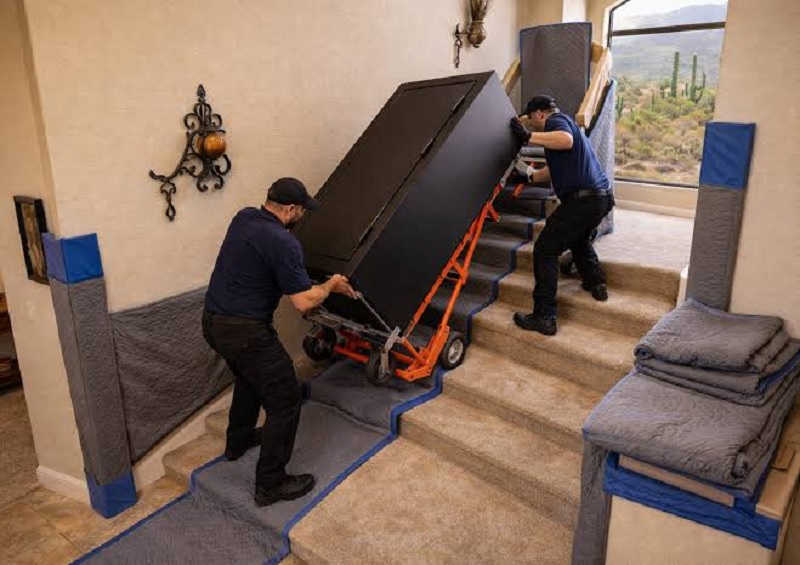
A complex route with steep stairs, tight turns, or an extremely heavy safe may require experienced professionals. Professional safe movers have specialized equipment, training, and handling experience that can reduce the risk of serious injury or property damage.
You should assess the route honestly before deciding how the safe will be moved. A difficult path can become significantly more dangerous once the safe is already on the stairs or positioned in a narrow area.
Planning ahead allows you to recognize situations where professional assistance is the safer choice. Careful route preparation helps ensure that the moving process is approached with appropriate caution and suitable support.
Choose the Right Equipment for Moving
Selecting appropriate equipment is an important part of preparing to move a heavy gun safe upstairs. The right tools can support controlled handling and reduce unnecessary strain, but equipment alone does not eliminate the risks involved. Consider the safe’s weight, dimensions, stairway design, and moving route before deciding whether the task requires professional safe-moving services.
Consider Professional-Grade Moving Equipment
Heavy safes often require specialized equipment designed for controlling large loads during transportation. Standard household equipment may not be suitable for the safe’s weight or for navigating a staircase safely. Using inappropriate or damaged equipment can increase the risk of losing control.
Check the manufacturer’s weight rating and intended use before relying on any moving equipment. The equipment should be appropriate for both the load and the conditions of the planned route.
For a particularly heavy gun safe, trained professionals may use specialized safe-moving equipment and techniques. Hiring experienced movers can be a safer option when the weight or stairway conditions exceed what can be responsibly managed.
Use Proper Protective Equipment
Personal protective equipment can help reduce some common risks while preparing for a heavy move. Suitable footwear with good traction and appropriate work gloves may support better grip and stability during handling.
However, protective equipment does not make an unsafe lifting situation safe. Avoid relying on gloves, shoes, or other personal equipment as a substitute for proper planning, adequate assistance, or professional services.
Everyone involved should understand the route and avoid working in cluttered or unstable conditions. Clear communication and a properly prepared environment are equally important when handling a large and heavy object.
Protect Floors, Walls, and Stairway Surfaces
Moving a gun safe through a home can place pressure on flooring, stairs, walls, and door frames. Suitable protective materials may help reduce scratches or surface damage, particularly along areas where the safe could come into contact with the property.
Make sure any protective covering remains secure and does not create a slipping or tripping hazard. Loose materials on stairs or walkways can introduce additional risks during an already difficult move.
Inspect the route after placing protective materials and confirm that there is still sufficient clearance. The goal should be to maintain a stable and unobstructed path rather than adding unnecessary obstacles to the moving area.
Inspect All Equipment Before Starting
Before beginning the move, inspect any equipment that will be used and look for visible damage, wear, loose components, or other signs that it may not perform as intended. Do not use equipment with an uncertain condition or an unsuitable weight capacity.
Confirm that everyone involved understands their role and knows when to stop the process if conditions become unsafe. Avoid rushing, improvising, or continuing when control of the safe cannot be maintained.
For steep stairways, difficult turns, or extremely heavy safes, professional safe movers remain the most appropriate choice. A careful equipment inspection and realistic assessment of the task can help prevent unnecessary injuries and property damage.
Prepare the Gun Safe Before Moving
Preparing the gun safe before moving it upstairs can make the process more organized and reduce unnecessary handling risks. A heavy safe should not be moved without first checking its condition, contents, and external components. Taking time to prepare the safe also helps you identify potential problems and decide whether professional movers are needed for the task.
Empty the Safe and Secure Its Contents
Before moving the gun safe, remove its contents whenever possible to reduce unnecessary weight. Firearms should be unloaded and handled according to applicable laws and established firearm safety practices before being placed in a separate secure location.
Remove ammunition and other loose items from the interior as well. This can prevent objects from shifting or becoming damaged while the safe is being transported through the home.
After emptying the safe, check shelves, drawers, and removable components. Taking out loose or detachable parts can make the unit easier to prepare and prevent internal items from moving unexpectedly during transportation.
Check the Safe’s Weight and External Features
Confirm the exact weight of the gun safe before making any moving arrangements. Manufacturer information can provide important details about the total weight and dimensions, helping you assess whether the move requires specialized equipment or professional assistance.
Inspect handles, hinges, electronic components, and other exterior features that may affect the safe’s overall dimensions. These parts can create clearance problems when passing through narrow doorways, hallways, or staircases.
Avoid making assumptions based on the safe’s appearance. Even a relatively compact gun safe can weigh several hundred pounds, making it difficult to control safely on stairs without appropriate expertise and equipment.
Secure the Door and Removable Components
The safe door should be properly closed and secured before any movement begins. A shifting or unexpectedly opening door can change the balance of the safe and create a serious handling hazard.
Check whether any shelves, drawers, handles, or other components can be safely removed according to the manufacturer’s instructions. Removing suitable detachable parts may reduce the overall weight or prevent damage during the move.
Do not modify or disassemble structural or security components without proper knowledge or authorization. When the preparation process becomes complicated, consulting the manufacturer or an experienced safe-moving professional can help avoid unnecessary damage.
Inspect the Safe and Final Moving Setup
Before starting the move, inspect the exterior for loose parts, visible damage, or features that could interfere with controlled handling. Confirm that the safe has been properly prepared and that the planned route remains clear and suitable.
Everyone involved should understand the moving plan and recognize when to stop rather than continuing through an unsafe situation. Rushing or improvising with a heavy safe can increase the risk of serious injury or property damage.
For extremely heavy safes, steep staircases, or difficult routes, professional safe movers are often the safest choice. A final inspection helps ensure that the safe and surrounding area are properly prepared before the transportation process begins.
Protect the Stairs and Surrounding Areas
Moving a heavy gun safe upstairs can place significant pressure on stairs, flooring, walls, and nearby fixtures. Preparing and protecting these areas before the move can help reduce avoidable property damage and create a safer working environment. The goal is to keep the moving route clear, stable, and free from unnecessary obstacles while considering professional assistance for particularly heavy or difficult moves.
Clear the Stairway and Moving Path
Start by removing furniture, decorations, loose rugs, electrical cords, and other objects from the stairway and surrounding route. Even small obstacles can become dangerous when people are focused on controlling a heavy object.
Check the stairs for loose boards, damaged surfaces, or other visible problems that could affect stability. The entire route should provide enough clear space for controlled movement without forcing people into awkward positions.
Pay attention to the areas at the top and bottom of the stairs as well. Landings, hallways, and doorways should remain clear so there is enough room to safely reposition or stop the safe when necessary.
Use Suitable Floor and Surface Protection
Protective materials can help reduce scratches, dents, and other surface damage during the moving process. Consider the type of flooring and stair surface when selecting appropriate protection, especially in areas where accidental contact may occur.
Make sure any protective covering is properly secured and does not create an additional slipping or tripping hazard. Loose materials can move unexpectedly and make an already difficult task more dangerous.
Avoid reducing the available clearance by adding bulky protection in narrow areas. The stairway should remain as stable and unobstructed as possible while still providing reasonable protection for vulnerable surfaces.
Protect Walls, Railings, and Door Frames
Walls, railings, corners, and door frames can easily be damaged when a large, heavy safe passes through a narrow space. Inspect these areas before moving and identify points where the safe may come close to surrounding surfaces.
Suitable padding or temporary protective materials may help reduce accidental marks or impacts. However, any protection should be placed carefully so it does not interfere with the available space or the safe handling process.
Measure tight areas again after adding protection. This helps ensure that the route still provides sufficient clearance and that the safe will not need to be forced through a restricted section.
Inspect the Area Before Starting the Move
Complete a final inspection of the stairs and surrounding areas before moving the gun safe. Confirm that the route is clear, protective materials are stable, and no new obstacles have been introduced during preparation.
Everyone involved should understand the planned route and avoid rushing through difficult sections. Clear communication is especially important when approaching narrow landings, corners, or changes in direction.
For extremely heavy safes or complicated stairways, professional safe movers can provide specialized equipment and experience. A carefully prepared environment helps reduce unnecessary risks to both the people involved and the surrounding property.
People Also Asked
How Big Is A Gun Safe?
The size of a gun safe varies considerably depending on its intended capacity and design. You can find compact models designed for a small number of firearms as well as large safes intended for extensive collections and additional equipment.
When choosing a size, you should consider height, width, depth, and usable interior space rather than exterior dimensions alone. Shelving, interior panels, insulation, and locking components can reduce the available storage area. You should also measure the location where you plan to place the safe so that the finished unit can be installed and accessed comfortably.
What Is A Standard Gun Safe Size?
There is no single standard size for a gun safe because manufacturers produce different models for different storage requirements. You can find smaller safes that fit inside closets or other limited spaces, while larger models may stand several feet tall.
The right dimensions depend on what you need to store and how much available space you have. You should measure your intended location before purchasing a safe and compare those measurements with the manufacturer’s exterior dimensions. Remember to account for door clearance and surrounding space, since a safe that technically fits may still be difficult to access or install.
How Tall Is A Gun Safe?
A gun safe can range from relatively short cabinets to tall floor-standing models. The height you need depends largely on the type and number of firearms you intend to store and whether you want additional shelves or compartments.
You should measure the available ceiling height and installation area before choosing a tall safe. Pay attention to stairways, doorways, and other access points as well. A safe may fit perfectly in its final location but be impossible to move through the entrance. Leaving suitable clearance above the safe can also make installation, maintenance, and access more convenient.
How Wide And Deep Is A Gun Safe?
The width and depth of a gun safe vary according to its storage capacity, construction, and intended placement. Larger models generally require more floor space, while compact designs can fit more easily into smaller rooms or designated storage areas.
You should measure both the available floor area and the access route before selecting a particular model. Consider door swing, nearby furniture, walls, and walkways when evaluating the dimensions. Interior depth also matters because thick doors and internal compartments can reduce usable space. Comparing exterior and interior measurements gives you a better understanding of how the safe will actually function.
How Big Should A Gun Safe Be For Multiple Firearms?
The appropriate size depends on the number and types of firearms you need to store, along with any additional storage requirements. You should avoid choosing a safe based solely on its advertised firearm capacity because manufacturers may use different sizing and storage configurations.
Consider leaving some additional space instead of filling the interior completely. This can make organization easier and allow room for appropriate protective storage accessories. Adjustable shelving can also provide flexibility when your storage requirements change. Before selecting a safe, measure your available space and compare it with the manufacturer’s actual interior dimensions and recommended capacity.
Does A Larger Gun Safe Mean Better Security?
A larger gun safe is not automatically more secure than a smaller one. Security depends on factors such as construction quality, locking mechanisms, installation, materials, and whether the safe has been independently tested or certified for specific security standards.
You should choose a size based on your genuine storage requirements rather than assuming that a larger model provides greater protection. A very large safe can also be heavier and more difficult to transport or install.
Consider the safe’s security ratings and construction details alongside its dimensions. Proper installation and restricted access are also important parts of responsible firearm storage.
How Do You Measure Space For A Gun Safe?
Start by measuring the height, width, and depth of the location where you intend to install the safe. Record each measurement carefully and compare it with the safe’s exterior dimensions, including any handles, hinges, or other components that extend beyond the main body.
You should also measure the route used to bring the safe into the location. Check doorways, hallways, stairways, corners, and ceiling clearance. Leave enough surrounding space for the door to open properly and for comfortable access. Careful measurements before purchase can help you avoid installation problems and ensure the safe fits both the destination and the moving route.
Final Words
Choosing the right size depends on more than simply counting the number of firearms you plan to store. Available space, interior organization, future storage needs, and the room where the safe will be placed can all affect your decision. A properly sized safe should provide secure storage without becoming overcrowded.
When asking how big is a gun safe, consider both its external dimensions and usable interior capacity. Measure the intended installation area, including doorways, hallways, and staircases, before purchasing or moving a heavy safe. It is also wise to allow additional space for accessories and future storage needs.
Ultimately, a larger safe can offer greater flexibility, but it must still fit securely in your chosen location. By comparing dimensions, capacity, weight, and installation requirements, you can select a gun safe that provides practical organization while supporting responsible and secure storage practices.