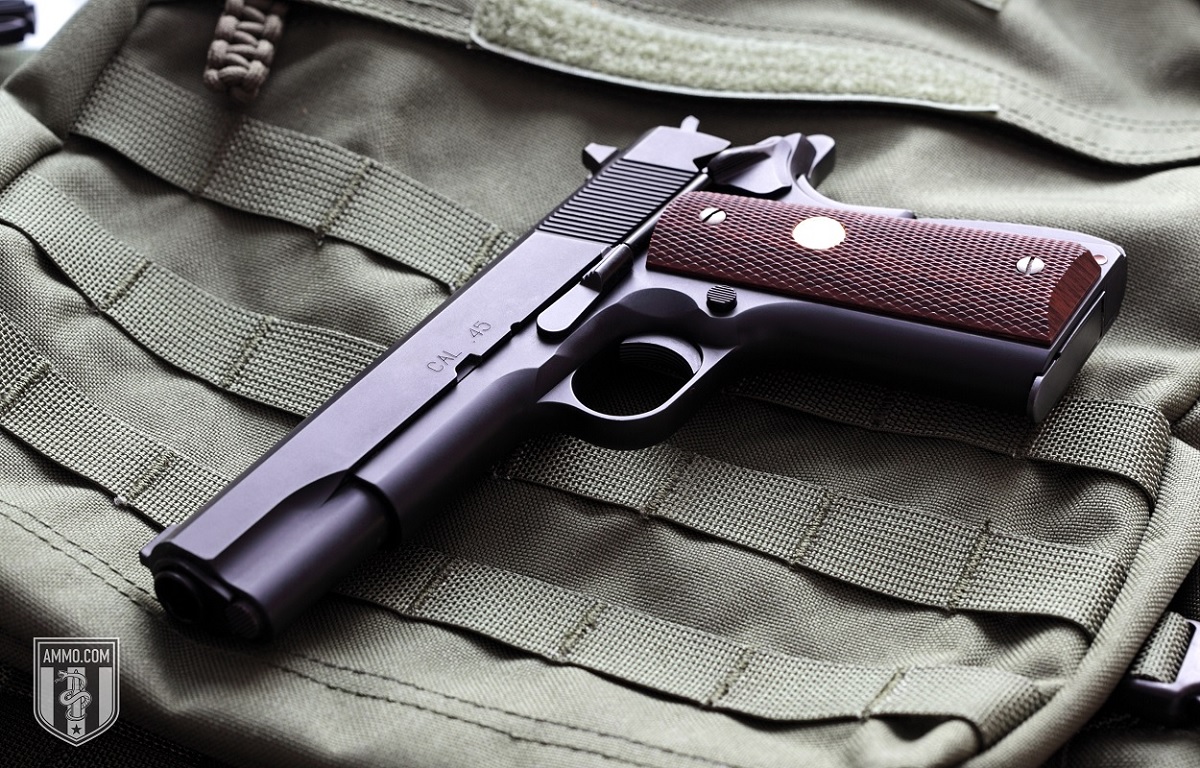
What Is the Best .45 ACP Ammo for Self Defense Complete Guide for Reliable Protection
The .45 ACP has long been trusted for personal defense because of its stopping power and proven performance in real-world situations. Choosing the right ammunition plays a major role in how effective a handgun can be when it matters most.
Many shooters often ask what is the best 45 acp ammo for self defense when comparing hollow points, ball rounds, and modern defensive loads designed for controlled expansion and reliable penetration.
The answer depends on factors like expansion consistency, penetration depth, recoil management, and how reliably the round feeds in your firearm. Premium defensive hollow points are usually designed to balance all these elements for maximum effectiveness and performance through different barrier conditions.
Understanding these aspects helps you make a more confident choice for personal protection. With the right load, a .45 ACP pistol becomes a dependable tool for home defense or concealed carry in critical situations.
.45 ACP Ammo for Self Defense
.45 ACP ammo for self defense is widely respected for its balance of stopping power, manageable velocity, and consistent real-world performance. Designed for defensive use, modern .45 ACP loads often focus on controlled expansion and reliable penetration to ensure effectiveness in high-stress situations.
When choosing defensive ammunition, factors like bullet design, feed reliability, and performance through barriers become extremely important. The goal is not just power, but predictable behavior when it matters most. Understanding how different .45 ACP loads perform helps you select ammunition that enhances both safety and confidence in everyday carry or home defense scenarios.
Hollow Point Expansion Performance
Hollow point bullets are commonly considered the standard choice for .45 ACP self-defense ammunition because of their controlled expansion. When the bullet strikes a target, the hollow cavity is designed to expand outward, creating a larger wound channel while reducing the risk of over-penetration. This expansion helps transfer energy more efficiently, increasing stopping potential in critical moments.
Modern engineering has significantly improved reliability, allowing hollow points to expand consistently even after passing through clothing or light barriers. Premium defensive loads are carefully tested to maintain expansion across different conditions, making them a dependable option for concealed carry and home defense users who prioritize predictable terminal performance.
Penetration and Barrier Reliability
Penetration is a crucial factor when evaluating .45 ACP self-defense ammo, as the round must reach vital areas to be effective. High-quality defensive loads are engineered to achieve balanced penetration, typically designed to perform well through clothing, glass, and other common barriers without losing effectiveness. Under-penetration may reduce stopping power, while over-penetration increases risk to bystanders.
Manufacturers aim to meet ballistic standards that ensure consistent depth in gel testing, reflecting real-world scenarios. Barrier reliability also matters because defensive situations are unpredictable, and ammunition must function without significant performance loss even after encountering intermediate obstacles before reaching the intended target.
Recoil Control and Firearm Compatibility
Recoil control plays a significant role in how effectively a shooter can use .45 ACP ammunition for self defense. While the caliber is known for a stronger push compared to smaller rounds, modern defensive loads are designed to balance velocity and pressure for smoother shooting characteristics.
This helps improve follow-up shot accuracy, which is essential in defensive encounters. Firearm compatibility is equally important, as not all pistols cycle every type of hollow point reliably. Testing different loads in your specific handgun ensures proper feeding, extraction, and overall performance. Choosing ammunition that your firearm handles smoothly increases confidence and consistency in critical situations.
Key Factors to Consider When Choosing 45 ACP Self Defense Ammo
Selecting the right .45 ACP self-defense ammunition goes beyond picking any hollow point off the shelf. Performance depends on how the bullet behaves on impact, how consistently it expands, and how deeply it penetrates. Other important aspects include recoil control, feeding reliability, and overall compatibility with your firearm. Each factor directly affects real-world defensive performance. A well-balanced defensive load ensures predictable results, giving you more confidence during high-stress situations where accuracy, consistency, and reliability matter most.
Bullet Design and Expansion Consistency
Bullet design is one of the most important elements when evaluating .45 ACP self-defense ammunition because it determines how the round behaves after impact. Modern defensive rounds often use hollow point structures engineered for controlled expansion, which helps create a wider wound channel while limiting unnecessary penetration. This balance is essential for effective stopping performance.
Expansion consistency is what separates premium defensive ammo from standard loads. A quality round must expand reliably even after passing through clothing or light barriers. If expansion fails, the bullet may act like a full metal jacket and reduce effectiveness. If it over-expands, penetration may become insufficient. Manufacturers address this by using bonded cores, precision cuts, and jacket reinforcement.
In real defensive scenarios, conditions are unpredictable, so ammunition must perform consistently across different environments. Whether facing fabric layers or angled impacts, the bullet should behave in a controlled and repeatable manner. This consistency builds trust in the ammunition when it is needed most.
Testing and engineering also play a big role in maintaining reliability. High-quality .45 ACP defensive loads are extensively tested in ballistic gel and real-world simulations to ensure they meet expected performance standards. This helps ensure dependable results under stress.
Penetration Depth and Barrier Performance
Penetration depth is a critical factor in .45 ACP self-defense ammo because the bullet must reach vital organs to be effective. If penetration is too shallow, the round may fail to stop a threat. If it is too deep, there is a risk of over-penetration and potential danger beyond the target.
Quality defensive ammunition is designed to meet standardized ballistic gel testing ranges that simulate human tissue. These standards help ensure the bullet maintains enough energy to reach effective depth while still expanding properly. This balance is essential for real-world defensive use.
Barrier performance is another major consideration because threats are not always unobstructed. Clothing, glass, or light cover can affect bullet behavior. Good self-defense ammo is engineered to maintain structural integrity even after passing through such barriers.
Advanced designs often include bonded jackets or reinforced cores to prevent fragmentation or deformation. This allows the bullet to retain weight and energy after impact. As a result, it can continue to penetrate effectively even in challenging conditions.
Choosing ammunition with strong barrier performance ensures more consistent results in unpredictable environments. This makes it more dependable for both concealed carry and home defense situations.
Reliability, Recoil, and Firearm Compatibility
Reliability is one of the most important aspects of any .45 ACP self-defense load because even the best-performing bullet is useless if it does not function correctly in your firearm. Consistent feeding, ignition, and extraction are essential for dependable operation under stress.
Different pistols may react differently to specific bullet shapes or loads. This is why testing your chosen ammunition in your own firearm is crucial. It helps ensure smooth cycling and reduces the risk of malfunctions during critical moments.
Recoil management also plays a key role in defensive shooting. The .45 ACP has a naturally strong recoil impulse, but modern defensive loads are designed to balance pressure and velocity for more controlled shooting. This improves follow-up shot accuracy and overall handling.
Firearm compatibility goes beyond just cycling. It also includes how the recoil system responds and how the shooter maintains control. A load that feels too harsh or inconsistent can reduce accuracy under pressure.
Selecting ammunition that functions smoothly and feels controllable builds confidence. When reliability, recoil balance, and compatibility work together, the firearm becomes more effective in real defensive scenarios.
Best Types of .45 ACP Ammo for Self Defense
Choosing the best types of .45 ACP ammo for self defense involves understanding how different bullet constructions perform under real-world conditions. Each design offers unique advantages in terms of expansion, penetration, recoil control, and barrier performance. Defensive shooters typically focus on ammunition that delivers consistent terminal results while maintaining reliable feeding in semi-automatic pistols. The right choice depends on balancing stopping power with safety and controllability. Modern advancements in ammunition technology have created several highly effective options that improve performance and reliability in critical defensive situations.
Standard Hollow Point Defensive Ammo
Standard hollow point ammunition is one of the most widely used choices for .45 ACP self-defense due to its controlled expansion and proven effectiveness. These bullets are designed with a hollow cavity at the tip that expands upon impact, increasing the diameter of the projectile and creating a larger wound channel. This helps transfer energy more efficiently into the target, improving stopping performance without relying solely on penetration.
In most defensive scenarios, standard hollow points are engineered to expand reliably when hitting soft tissue or clothing. This makes them highly practical for everyday concealed carry or home defense use. Manufacturers carefully tune the jacket thickness and cavity design to ensure predictable expansion across a range of velocities and distances.
While effective, standard hollow points can sometimes vary depending on the firearm or barrel length. Testing in your specific handgun is important to confirm proper feeding and consistent performance. Despite minor variations, they remain a trusted and widely recommended option for defensive use.
Overall, standard hollow points provide a strong balance of expansion, penetration, and availability, making them a foundational choice for many .45 ACP users seeking dependable self-defense ammunition.
Bonded Hollow Point Ammunition
Bonded hollow point ammunition is designed for enhanced durability and improved performance through barriers. In this type of bullet, the jacket and core are chemically or mechanically bonded together, preventing separation upon impact. This results in better weight retention and more consistent penetration, even after hitting intermediate materials.
These rounds are especially useful in defensive situations where barriers like glass, wood, or heavy clothing may be present. Because the bullet maintains its structure, it is more likely to reach effective penetration depth while still expanding reliably. This combination makes bonded hollow points highly effective for unpredictable environments.
Another advantage is their consistency in terminal performance. Since the bullet is less likely to fragment or deform excessively, it delivers more predictable results. This is critical in self-defense situations where reliability is more important than raw expansion alone.
However, bonded hollow points may produce slightly different recoil characteristics depending on load design. Despite this, they are widely regarded as one of the most dependable options for .45 ACP self-defense due to their strength and consistency under challenging conditions.
Low-Recoil Defensive Ammunition
Low-recoil defensive ammunition is designed to improve control and accuracy, especially during rapid follow-up shots. While .45 ACP is known for its strong recoil impulse, these specialized loads reduce felt recoil by optimizing pressure and bullet velocity. This makes them easier to handle for shooters of different experience levels.
These rounds are particularly useful in high-stress defensive situations where maintaining accuracy under pressure is essential. Reduced recoil allows for quicker target reacquisition, which can significantly improve defensive effectiveness. This is especially important in scenarios requiring multiple shots.
Low-recoil loads still maintain defensive-level expansion and penetration, ensuring they are not sacrificing effectiveness for comfort. Manufacturers carefully balance powder charge and bullet weight to maintain reliable terminal performance while improving shootability.
They are also beneficial for individuals with smaller frames or less shooting experience. By making the firearm more controllable, low-recoil ammunition increases confidence and consistency, which are critical factors in any self-defense application.
Frangible Self Defense Ammunition
Frangible ammunition is designed to break apart upon impact with hard surfaces, reducing the risk of over-penetration or ricochet. In .45 ACP self-defense use, it offers a unique approach focused on safety in close-quarters environments, especially where bystander risk is a concern.
These bullets are typically made from compressed metal powders that disintegrate when striking solid targets. Upon hitting soft tissue, they are designed to fragment in a controlled manner, transferring energy quickly and reducing the chance of exiting the target. This makes them useful in confined spaces.
One of the main benefits of frangible ammo is its safety profile in indoor environments. It reduces the likelihood of dangerous over-penetration, which can be a concern in home defense situations. However, performance can vary depending on distance and target type.
Despite their advantages, frangible rounds may not always penetrate as deeply as traditional hollow points. Because of this, they are often chosen for specific defensive contexts rather than universal use, making them a specialized but valuable option in the .45 ACP category.
Top Performing Features in 45 ACP Defensive Rounds
Top performing features in .45 ACP defensive rounds are what separate standard ammunition from truly reliable self-defense loads. These features determine how the bullet behaves after impact, how consistently it performs across different scenarios, and how safely it can be used in real-world defensive situations. Key performance traits include controlled expansion, balanced penetration, weight retention, recoil management, and dependable cycling in semi-automatic pistols. Understanding these characteristics helps shooters choose ammunition that delivers consistent stopping power while maintaining control and reliability under pressure.
Controlled Expansion and Wound Channel Efficiency
Controlled expansion is one of the most important performance features in .45 ACP defensive ammunition because it directly affects how effectively the bullet transfers energy into a target. A well-designed hollow point expands in a predictable manner, increasing its diameter upon impact and creating a wider wound channel. This process improves stopping effectiveness without relying solely on deep penetration.
In real defensive use, consistent expansion ensures the bullet performs reliably across different conditions such as heavy clothing or angled impacts. Modern designs use precision-cut cavities and engineered jacket thickness to ensure the expansion occurs smoothly rather than unpredictably. This helps maintain balance between penetration and energy transfer.
Efficient wound channel formation is also critical because it increases the likelihood of rapid incapacitation. By maximizing surface impact while maintaining structural integrity, the bullet can deliver more effective terminal performance. This balance is essential in high-stress situations.
Manufacturers extensively test expansion behavior in ballistic gel and controlled environments to ensure repeatability. This testing ensures that each round behaves consistently, giving shooters greater confidence in defensive scenarios where performance cannot be left to chance.
Penetration Depth and Weight Retention Stability
Penetration depth is a defining feature of effective .45 ACP defensive rounds because it determines how deeply the bullet can reach vital areas. A well-balanced defensive load must penetrate far enough to be effective without over-penetrating and posing risk beyond the target. This balance is carefully engineered through bullet design and velocity control.
Weight retention plays a major role in maintaining penetration consistency. High-performing defensive rounds often use bonded cores or reinforced jackets to prevent fragmentation during impact. This ensures the bullet retains most of its mass as it travels through the target, maintaining energy and improving overall effectiveness.
Stable penetration also ensures better performance through intermediate barriers such as clothing, glass, or wood. When a bullet maintains its structure after impact, it is more likely to continue traveling at an effective depth, even under challenging conditions.
Consistency in both penetration and weight retention helps create predictable outcomes, which is critical in defensive situations. Shooters rely on ammunition that behaves the same way every time, regardless of external variables or environmental conditions.
Reliability, Feeding Performance, and Recoil Control
Reliability is one of the most critical performance features in .45 ACP defensive ammunition because even the most advanced bullet design is ineffective if it does not function properly in the firearm. Consistent feeding, ignition, and extraction ensure the firearm operates smoothly during high-stress situations.
Feeding performance depends heavily on bullet shape and overall cartridge design. Defensive loads are engineered with profiles that allow smooth chambering in a wide range of semi-automatic pistols. This reduces the risk of malfunctions such as jams or misfeeds when it matters most.
Recoil control is another essential factor that directly impacts shooting accuracy and follow-up speed. While .45 ACP naturally produces a stronger recoil impulse, modern defensive loads are optimized to balance pressure and velocity, resulting in more manageable shooting characteristics.
Improved recoil control helps shooters maintain better target acquisition and faster recovery between shots. This is especially important in defensive encounters where multiple shots may be required. A stable and controllable load increases both confidence and effectiveness under pressure.
FAQs
What Is The Best 45 ACP Ammo For Self Defense?
The best .45 ACP ammo for self defense is typically high-quality jacketed hollow point (JHP) ammunition designed for controlled expansion and reliable penetration. You should look for loads that expand consistently, retain weight, and perform well through clothing and light barriers. Popular defensive options are engineered to balance stopping power with manageable recoil. You benefit most from ammunition that functions flawlessly in your specific handgun, delivers predictable terminal performance, and has been tested for reliability in real defensive scenarios.
Why Is Hollow Point Ammo Preferred For 45 ACP Self Defense?
Hollow point ammo is preferred because it is designed to expand on impact, creating a larger wound channel and transferring energy more efficiently to the target. You reduce the risk of over-penetration compared to full metal jacket rounds, which is important in home defense or crowded environments. Modern hollow points are engineered for consistent expansion even through clothing. This gives you more reliable stopping performance while maintaining controlled penetration, which is critical in defensive situations where precision and safety matter.
Does More Bullet Weight Mean Better Self Defense Performance?
Heavier bullets in .45 ACP, such as 185, 200, or 230 grain loads, do not automatically guarantee better performance. You need a balance between penetration, expansion, and recoil control. Heavier bullets often penetrate deeper, while lighter ones may offer faster expansion and reduced recoil. The best choice depends on how your firearm handles the load. You get better results by selecting a round that performs consistently in testing and feels controllable when firing follow-up shots under stress.
Should You Test Different 45 ACP Ammo In Your Gun?
Yes, you should always test different defensive .45 ACP ammo in your firearm before relying on it for protection. Not all pistols feed every hollow point design equally well due to variations in bullet shape and recoil systems. You need to confirm reliable feeding, consistent ejection, and accuracy with your chosen load. Testing also helps you understand recoil behavior and shot placement. This ensures your selected ammunition performs flawlessly when you depend on it in a real defensive situation.
Is Bonded Hollow Point Ammo Better Than Standard Hollow Points?
Bonded hollow point ammo is often considered more durable because the bullet core and jacket are fused together, improving weight retention after impact. You benefit from more consistent penetration, especially through barriers like glass or heavy clothing. Standard hollow points may expand more aggressively but can sometimes lose material. Bonded rounds offer a balance of expansion and structural integrity, making them highly reliable for unpredictable defensive environments where consistent performance is more important than maximum expansion alone.
Does Recoil Affect The Choice Of 45 ACP Self Defense Ammo?
Recoil plays a major role in how effectively you can use .45 ACP for self defense. Strong recoil can slow follow-up shots and reduce accuracy under stress. You should choose ammunition that offers a balance between power and controllability. Some defensive loads are engineered to reduce recoil while maintaining effective terminal performance. When you can manage recoil comfortably, you improve shot placement, recovery speed, and overall defensive effectiveness, which is critical in real-world scenarios.
What Features Should You Prioritize In 45 ACP Defensive Ammo?
You should prioritize controlled expansion, reliable penetration, and consistent feeding when choosing .45 ACP defensive ammo. These features ensure the bullet performs predictably after impact while functioning smoothly in your firearm. You also need good weight retention and balanced recoil for better control. Ammunition that performs consistently across different conditions gives you greater confidence. The best defensive load is one that cycles reliably in your gun and delivers repeatable performance when every shot matters.
Final Thoughts
Choosing the right defensive ammunition plays a major role in how effectively a .45 ACP performs in real-world situations. While the caliber is already known for its strong stopping power, the actual performance depends heavily on bullet design, expansion, and reliability in your specific firearm. Selecting high-quality defensive rounds ensures better control, reduced over-penetration, and more consistent results when it matters most.
When evaluating options, focus on jacketed hollow points, bonded bullets, and proven +P loads from reputable manufacturers. These types are widely tested and designed to meet defensive standards, offering balanced penetration and reliable expansion. However, the most important factor is how well the ammunition cycles in your pistol, since even the best round is ineffective if it does not function properly in your setup.
Ultimately, understanding what is the best 45 acp ammo for self defense comes down to combining performance data with personal testing. By practicing with your chosen load and ensuring consistent reliability, you can make a confident and informed decision for personal protection.