Are Glocks Legal In Massachusetts? Current Rules, Restrictions & Compliance Guide
Understanding Massachusetts firearm laws can be challenging because the state has specific requirements that differ from federal regulations and the laws of many other states. Restrictions can also depend on the firearm’s model, configuration, licensing requirements, and the date applicable laws took effect.
For anyone researching are glocks legal in massachusetts, the answer requires more than simply looking at whether Glock is a common firearm brand. Massachusetts has detailed rules governing handgun ownership, sales, transfers, and approved firearms, making it important to consider the specific Glock model and applicable legal requirements.
Recent changes to Massachusetts firearm laws have also made the subject more complicated. Certain models and configurations may be subject to restrictions, while previously owned firearms can raise different legal questions depending on the circumstances.
This guide explains the key factors that can affect Glock legality in Massachusetts, including state requirements, handgun restrictions, and important considerations for owners and prospective buyers. Always verify the current Massachusetts laws and official requirements before purchasing, possessing, or transferring a firearm.
Are Glocks Legal In Massachusetts?
Massachusetts law does not simply prohibit or permit every Glock as a single category. The legality of a particular Glock depends on the exact model, its status under the state’s approved handgun roster, applicable sales regulations, licensing requirements, and other firearm laws. The state’s current June 2026 roster lists numerous Glock models, including several 9mm, .45 ACP, and 10mm variants.
Glock Models On The Massachusetts Approved Handgun Roster
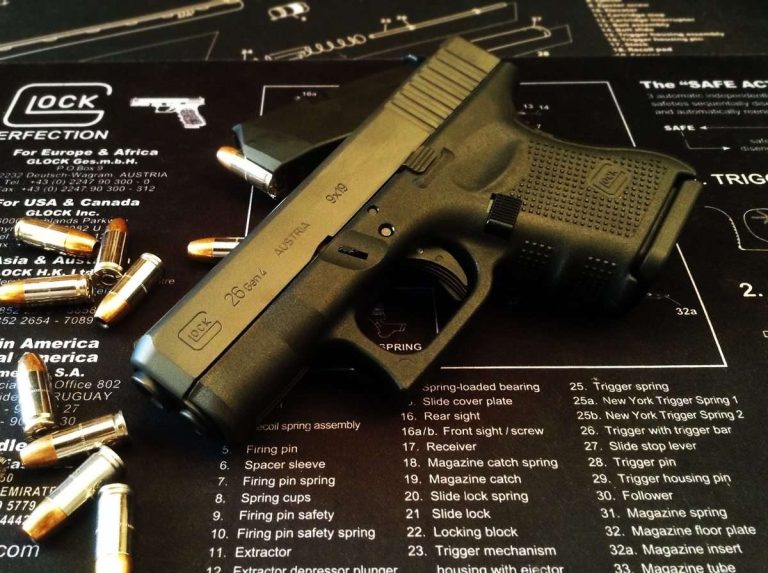
Several Glock models appear on Massachusetts’ current Approved Handgun Roster. The June 2026 roster is the most recent version and supersedes previous rosters. Listed models include various Glock 17, Glock 19, Glock 26, Glock 34, Glock 43, Glock 43X, and Glock 48 variants, along with models chambered in .45 ACP and 10mm.
The presence of a Glock model on the approved roster does not mean every sale or transfer is automatically lawful. Massachusetts states that firearms on the Approved Handgun Roster do not necessarily comply with the Attorney General’s separate handgun sales regulations. Those additional rules apply to dealers and handgun transfers, so the exact circumstances matter.
Massachusetts Licensing Requirements For Glock Ownership
Massachusetts generally requires an appropriate firearms license to possess or carry a firearm. The state identifies the License to Carry (LTC) and Firearms Identification (FID) Card as key licensing mechanisms, subject to their respective requirements and exemptions.
For someone considering a Glock, licensing is therefore a separate issue from whether a particular model appears on the approved roster. A model may be listed while the prospective owner still needs to satisfy Massachusetts licensing, eligibility, registration, and transaction requirements. The state’s Firearms Services resources provide current information about applications, transfers, licensing, and firearm records.
Glock Sales And Transfers In Massachusetts
Massachusetts places additional rules on handgun sales and transfers. The state’s current approved-handgun documentation specifically notes that transfers are also subject to the Attorney General’s handgun sales regulations under 940 CMR 16.00 and related provisions. This means checking only the approved roster may not provide the complete legal picture.
A Glock that appears on the roster can therefore still require careful review of the transaction circumstances. Sales, private transfers, registration requirements, and licensing obligations can involve different rules. Massachusetts also maintains electronic firearm registration requirements through the MIRCS Firearms Licensing Portal under 501 CMR 19.00.
Why The Exact Glock Model Matters
The answer to whether a Glock is legal in Massachusetts can change depending on the specific model and applicable regulations. The state’s June 2026 Approved Handgun Roster identifies individual manufacturers, models, calibers, and approval information rather than treating every firearm from a particular brand as automatically approved.
Massachusetts also has separate laws concerning assault-style firearms and prohibited weapons. State guidance explains that handguns can be subject to Massachusetts handgun regulations even when they are addressed separately from assault-weapon provisions. Because firearm laws can change and individual circumstances can affect legality, checking the current Massachusetts rules for the exact model is important.
Checking Current Massachusetts Firearm Rules
Massachusetts maintains official resources covering firearms laws, approved rosters, licensing, sales, transfers, and registration. The Approved Handgun Roster is periodically updated, and the state specifically advises users to rely on the most recent roster when determining statutory compliance.
For that reason, researching are glocks legal in massachusetts should involve more than checking whether Glock is a permitted brand. You should verify the exact model, current roster status, applicable sales regulations, licensing requirements, and any restrictions that apply to the particular firearm or transaction. For a specific legal situation, consulting the current Massachusetts rules or a qualified Massachusetts firearms attorney is appropriate.
What Massachusetts Laws Apply To Glock Pistols?
Massachusetts has several layers of firearm regulation that can apply to Glock pistols, including licensing, approved-handgun requirements, sales and transfer rules, registration, and restrictions on certain firearm configurations. The rules can also change over time, so checking the current state requirements is important. A Glock’s legality depends on its exact model and the circumstances surrounding possession, purchase, or transfer.
Firearms Licensing Requirements
Massachusetts generally requires an appropriate firearms license for lawful possession of firearms. The state provides different licensing mechanisms, including the Firearms Identification Card and License to Carry. The requirements and privileges associated with each license are not identical, so the appropriate license depends on the firearm and the activity involved.
For someone researching a Glock pistol, licensing is an important consideration separate from the firearm’s model. Meeting licensing requirements does not automatically mean every Glock can legally be purchased or transferred. Massachusetts residents should review the current requirements through the Massachusetts government’s firearms licensing resources and make sure their specific circumstances satisfy applicable state law.
Approved Handgun Roster
Massachusetts maintains an Approved Handgun Roster that identifies handguns meeting the state’s statutory requirements for inclusion. The roster contains specific manufacturers, models, and configurations rather than simply approving an entire brand. As a result, the fact that Glock is a well-known manufacturer does not by itself establish that every Glock model can be lawfully sold in Massachusetts.
The roster is updated periodically, meaning the status of a particular model should be checked against the most recent version. A Glock model appearing on the roster is also not the only legal consideration because other Massachusetts regulations can apply to handgun sales and transfers. Reviewing the current roster alongside applicable regulations provides a more complete picture.
Handgun Sales And Transfer Rules
Massachusetts regulates the sale and transfer of handguns through additional requirements that can apply even when a particular model appears on the Approved Handgun Roster. The state’s Attorney General has regulations addressing the sale of handguns, and dealers must comply with applicable state requirements when conducting transactions.
Transfers can also involve licensing, eligibility, background-check, and reporting requirements. The specific rules may differ depending on whether a transaction involves a licensed dealer, a private transfer, or another legally recognized circumstance. Because the details can affect whether a transaction is lawful, relying solely on the firearm’s model or brand is not sufficient.
Firearm Registration And Reporting
Massachusetts also maintains requirements concerning firearm registration and electronic records. The state’s Firearms Services resources provide information about firearm registration, licensing, transfers, and related procedures. Certain transactions may therefore involve documentation or reporting obligations in addition to the basic licensing requirements.
For Glock owners and prospective owners, these requirements make accurate records and current information particularly important. A firearm that was lawfully acquired under one set of circumstances may still be subject to registration or transfer rules when ownership changes. The applicable requirements should be verified through current Massachusetts resources rather than relying on outdated information.
Restrictions On Certain Firearm Configurations
Massachusetts law also contains restrictions concerning assault-style firearms and certain firearm configurations. These provisions can create additional legal questions depending on the characteristics of a particular handgun. Consequently, determining whether a Glock is lawful may require examining more than its manufacturer and model name.
The state’s firearm laws have undergone significant changes, so older online articles may not accurately describe current requirements. When evaluating a particular Glock, checking the current Massachusetts statutes, regulations, approved handgun roster, and official guidance is important. For circumstances involving a specific firearm or transaction, a Massachusetts firearms attorney can provide advice based on the applicable law.
Can You Buy A Glock In Massachusetts?
Yes, buying a Glock in Massachusetts can be lawful, but the process is subject to state-specific requirements. Massachusetts regulates handgun licensing, approved handgun models, sales, transfers, and registration. The exact Glock model also matters because the state maintains an Approved Handgun Roster that is updated periodically. A buyer therefore needs to consider both the firearm and the applicable licensing and transaction rules.
You Need The Appropriate Firearms License
Massachusetts requires a firearms license to possess or carry firearms unless a specific exemption applies. For handguns, the state’s License to Carry is particularly important because Massachusetts describes an LTC as authorizing eligible holders to purchase, possess, and carry handguns. The state also provides separate licensing categories, but they do not all provide the same purchasing privileges.
Residents applying for a firearms license generally apply through their local police department and must meet the state’s requirements. Massachusetts currently states that new applicants need a Massachusetts Basic Firearms Safety Course certificate, along with other application requirements. The current licensing process and eligibility standards should be checked through the state’s official firearms services resources before attempting a purchase.
The Glock Model Must Be Checked
Massachusetts maintains an Approved Handgun Roster containing specific makes and models that have satisfied the state’s handgun testing requirements. The June 2026 roster is the current roster published by Massachusetts and supersedes previous versions. It includes numerous Glock models, demonstrating that Glock handguns are not categorically excluded from the Massachusetts market.
However, the roster should be checked by exact model rather than by manufacturer name alone. Massachusetts specifically warns that modifications to the roster can occur periodically and instructs licensees and law-enforcement personnel to use the most recent roster for determining statutory compliance. A Glock model appearing on an older list may therefore require additional verification against the current roster.
Sales Regulations Also Apply
Being listed on the Approved Handgun Roster does not automatically mean that every transaction involving that handgun is lawful. The Massachusetts roster expressly states that handgun transfers are also subject to the Attorney General’s Handgun Sales Regulations. The state maintains 940 CMR 16.00 as its regulation governing handgun sales, making the transaction requirements another important part of the purchasing question.
This distinction is important because Massachusetts regulates more than simply which handgun models appear on its roster. The circumstances of a transaction, the parties involved, and their licensing status can affect whether a transfer is permitted. Massachusetts also maintains official resources covering firearm sales and transfers, making those resources useful for checking the requirements applicable to a particular purchase.
Registration And Transfer Requirements
Massachusetts has electronic firearm registration requirements administered through its firearms licensing system. State regulations establish requirements for registering firearms through the MIRCS system, while official guidance provides information about recording private sales and transfers. These requirements can become relevant when a firearm is acquired or transferred under circumstances covered by Massachusetts law.
The rules can also differ depending on whether a Glock is purchased from a Massachusetts firearms dealer or obtained through another legally recognized transfer. Massachusetts law addresses purchases and transfers involving licensed dealers and properly licensed individuals. Because these requirements can be detailed and change over time, the current state rules should be reviewed for the exact transaction rather than relying on general information about Glock ownership.
Checking The Current Rules Before Buying
The most reliable way to determine whether you can buy a particular Glock in Massachusetts is to check the current Approved Handgun Roster, confirm that you have the appropriate firearms license, and review the applicable handgun sales and transfer requirements. Massachusetts provides a centralized Firearms Services resource covering licenses, firearm sales and transfers, approved rosters, and related laws.
Because Massachusetts firearm regulations can change, older articles and informal online discussions may not accurately reflect the current legal position. For a specific Glock model or unusual purchase or transfer situation, reviewing the current Massachusetts rules and obtaining advice from a qualified Massachusetts firearms attorney can help clarify the requirements that apply.
Are Glock Magazines Legal In Massachusetts?
Glock magazines are subject to Massachusetts laws governing firearm feeding devices, and legality depends largely on magazine capacity, manufacturing date, and the circumstances of possession. Massachusetts defines a large-capacity feeding device as a magazine capable of accepting, or readily converted to accept, more than 10 rounds. State licensing and other firearm restrictions can also apply.
Massachusetts Magazine Capacity Rules
A major issue for Glock owners is the magazine’s capacity. Under Massachusetts law, a large-capacity feeding device generally means a fixed or detachable magazine capable of accepting more than 10 rounds of ammunition. This definition can apply to handgun magazines, including magazines designed for Glock pistols.
Massachusetts treats possession of large-capacity feeding devices as a separate legal issue from ordinary magazine ownership. The state’s current firearms laws contain specific provisions addressing large-capacity feeding devices, so a magazine’s capacity should not be evaluated independently from the applicable firearm laws and licensing requirements.
Are 10-Round Glock Magazines Legal?
Glock magazines that hold no more than 10 rounds generally fall outside Massachusetts’ statutory definition of a large-capacity feeding device because that definition concerns devices capable of accepting more than 10 rounds. However, magazine legality can still depend on the circumstances surrounding possession, purchase, transfer, and the firearm involved.
Massachusetts also states that residents who possess, carry, or transport firearms, ammunition, and feeding devices generally need an appropriate firearms license unless an exemption applies. Consequently, magazine capacity is only one part of the legal analysis. The owner’s licensing status and the circumstances of the transaction can also matter.
What About Glock Magazines Over 10 Rounds?
Glock magazines capable of accepting more than 10 rounds generally fall within Massachusetts’ definition of a large-capacity feeding device. State law specifically addresses possession of these devices, making them subject to substantially different rules from magazines holding 10 rounds or fewer.
Massachusetts’ current guidance states that a person may possess a large-capacity feeding device when it was manufactured before September 13, 1994. The law also contains specific exceptions and provisions, meaning the manufacturing date alone should not be treated as a complete answer for every situation.
Why The Magazine’s Manufacturing Date Matters
The September 13, 1994, date is particularly important under Massachusetts’ current guidance concerning large-capacity feeding devices. The state identifies pre-September 13, 1994 devices as potentially lawful to possess, subject to the applicable law. This distinction can be relevant when evaluating older magazines that exceed the ordinary 10-round threshold.
Newer magazines capable of holding more than 10 rounds can raise different legal concerns. Massachusetts law specifically addresses large-capacity feeding devices that were not lawfully possessed under the applicable provisions, and the state’s statutes have undergone significant amendments in recent years. Current law should therefore be checked rather than relying on older firearm articles or forum discussions.
Licensing And Glock Magazine Possession
Magazine restrictions do not operate independently of Massachusetts firearms licensing laws. State guidance explains that Massachusetts residents generally need a firearms license to possess, carry, and transport firearms, ammunition, and feeding devices, subject to statutory exceptions. The type of license can affect what a person may lawfully possess.
For Glock owners, this means determining magazine legality requires looking at more than whether a magazine fits a particular pistol. Capacity, manufacturing date, licensing status, and the circumstances of possession or transfer can all be relevant. Massachusetts maintains official Firearms Services resources for licensing, registration, transfers, and related requirements.
Checking Current Massachusetts Magazine Laws
Massachusetts firearm regulations have changed substantially in recent years, including amendments that became effective in 2024 and 2025. The state’s current statutes specifically address large-capacity feeding devices, while official guidance provides additional information about possession and licensing.
For that reason, anyone researching are Glock magazines legal in Massachusetts should verify the exact magazine capacity, manufacturing date, and circumstances involved against the current Massachusetts statutes and official guidance. For a particular magazine or ownership situation, a Massachusetts firearms attorney can provide advice based on the current law.
FAQs
Are Glocks Legal In Massachusetts?
Yes, some Glock pistols can be legally possessed in Massachusetts, but legality depends on the specific model and applicable state requirements. Massachusetts maintains an Approved Handgun Roster, and individual Glock models may appear on that roster. You also need to meet the state’s firearm licensing requirements and comply with applicable sales, transfer, registration, and possession laws. You should not assume that every Glock model is automatically legal simply because the manufacturer is permitted. Before purchasing or possessing a Glock, you should check the current Massachusetts requirements and verify the exact model.
Can You Buy A Glock In Massachusetts?
You can buy certain Glock pistols in Massachusetts when you meet the applicable licensing and transaction requirements. You generally need the appropriate Massachusetts firearms license, and the specific handgun must satisfy current state requirements. The Approved Handgun Roster is one important resource for checking individual models.
You should also understand that roster status does not necessarily answer every legal question surrounding a sale. Massachusetts has additional handgun sales and transfer regulations. Before making a purchase, you should verify the current rules and confirm that the specific model and transaction are permitted.
Are All Glock Models Legal In Massachusetts?
No, you should not assume that every Glock model is legal for purchase or transfer in Massachusetts. The state evaluates individual handgun models under its firearm regulations, and the Approved Handgun Roster identifies specific models rather than simply approving an entire manufacturer.
You should check the exact Glock model, configuration, and current roster status before making a purchase. Massachusetts also has separate rules governing handgun sales and transfers, so a model’s appearance on the roster does not automatically eliminate every other legal requirement. Current state regulations should always be reviewed because firearm laws can change.
Do You Need A License To Own A Glock In Massachusetts?
You generally need an appropriate Massachusetts firearms license to lawfully possess a Glock pistol, subject to specific statutory exceptions. Massachusetts provides different license types, and the rights associated with each license are not necessarily identical.
You should determine which license applies to your circumstances before acquiring a handgun. Licensing requirements can involve eligibility standards, application procedures, background checks, and safety-training requirements. Having a firearms license also does not automatically make every Glock model or transaction lawful. You should separately verify the firearm’s eligibility and comply with all applicable state requirements.
Are Glock 19 Pistols Legal In Massachusetts?
Certain Glock 19 models may be lawful in Massachusetts, but you should verify the exact model against the current state requirements. Massachusetts maintains an Approved Handgun Roster that lists specific handgun models, and Glock 19 variants can appear depending on the current roster.
You should also consider the circumstances of the purchase, transfer, or possession. The roster is only one part of Massachusetts firearm regulation, and additional sales and transfer requirements can apply. Before acquiring a Glock 19, you should check the current roster and Massachusetts licensing rules for your specific circumstances.
Are Glock Magazines Legal In Massachusetts?
Glock magazines are subject to Massachusetts laws concerning firearm feeding devices, and capacity is an important consideration. Magazines capable of accepting more than 10 rounds can fall under the state’s definition of large-capacity feeding devices and may be subject to additional restrictions.
You should also consider the magazine’s manufacturing date and your individual circumstances. Massachusetts law contains specific provisions concerning large-capacity feeding devices, including rules relating to certain pre-1994 devices. Because these laws have changed over time, you should verify the current requirements before possessing, purchasing, transferring, or transporting a Glock magazine.
Can You Carry A Glock In Massachusetts?
You generally need the appropriate Massachusetts License to Carry to lawfully carry a Glock handgun, subject to the state’s specific laws and restrictions. Possessing a firearm and carrying one are separate legal questions, so having lawful possession does not automatically mean you can carry the handgun wherever you choose.
You should also understand that Massachusetts restricts firearm possession and carry in certain locations and circumstances. Your license may contain conditions, and state law can impose additional restrictions. Before carrying a Glock, you should review the current Massachusetts requirements and understand the locations and circumstances where carrying may be prohibited.
What Should You Check Before Buying A Glock In Massachusetts?
Before buying a Glock in Massachusetts, you should verify several important legal details. Start by checking your firearms licensing eligibility and confirming that you have the appropriate license. Then check the exact Glock model against the current Massachusetts Approved Handgun Roster and review the applicable handgun sales and transfer requirements.
You should also consider magazine capacity, registration requirements, and any restrictions affecting the particular firearm or transaction. Because Massachusetts firearm laws can change, information from older websites may be outdated. For a specific purchase, you should consult current Massachusetts government resources or a qualified Massachusetts firearms attorney.
Final Words
A Glock may be legal to own in Massachusetts, but you should not assume that every Glock model or configuration automatically meets state requirements. Massachusetts has specific rules governing handgun licensing, approved firearms, magazine capacity, transfers, and possession. The exact model and configuration can therefore make a significant difference.
If you are researching are glocks legal in massachusetts, you should verify the specific Glock model, its configuration, and current Massachusetts requirements before purchasing or possessing it. You should also make sure you have the appropriate firearm license and understand any applicable restrictions.
Because Massachusetts firearm laws can change and may be highly specific, checking current official requirements is important. When you are uncertain about a particular Glock or your eligibility, consulting a licensed Massachusetts firearms dealer or qualified firearms attorney can help you determine whether the firearm complies with applicable laws.