Can You Put a Gun Safe Upstairs? Safe Placement Tips Every Homeowner Should Know
Choosing the right location for a gun safe is just as important as selecting the safe itself. Many homeowners consider placing a safe on the second floor to save space or keep firearms in a more private area. Before making that decision, it is important to understand the weight of the safe and how your home’s structure supports it.
The question can you put a gun safe upstairs often comes up because large safes can weigh several hundred pounds even before they are filled with firearms, ammunition, and other valuables. Floor strength, safe size, and proper installation all play a major role in ensuring safe placement.
Understanding can you put a gun safe upstairs helps you avoid unnecessary risks such as floor damage, difficult installation, or reduced accessibility. Looking beyond convenience allows you to choose a location that provides both security and long-term stability.
This guide explains can you put a gun safe upstairs, explores the factors that affect second-floor installation, and shares practical tips to help you place your gun safe safely while protecting both your firearms and your home.
Can You Put a Gun Safe Upstairs?
Placing a gun safe on an upper floor is possible, but it requires careful planning before installation. The safe’s weight, the strength of your home’s floor structure, and the intended storage capacity all influence whether an upstairs location is appropriate. Evaluating these factors helps you protect both your firearms and the structural integrity of your home while ensuring convenient and secure access.
Floor Strength and Weight Capacity
The most important consideration is whether the upstairs floor can safely support the combined weight of the gun safe and everything stored inside it. Large gun safes commonly weigh several hundred pounds when empty, and the addition of firearms, ammunition, documents, and other valuables can significantly increase the total load. Understanding the floor’s load-bearing capacity helps prevent unnecessary stress on the structure.
The location of the safe also affects how the weight is distributed. Placing the safe near a load-bearing wall allows the home’s structural framework to support the weight more effectively than positioning it in the center of a room. A wider safe base can also spread the load across a larger floor area, reducing concentrated pressure on individual floor joists.
Before moving a heavy safe upstairs, review the manufacturer’s listed weight and estimate the total loaded weight. For larger or heavier models, consulting a qualified contractor or structural engineer provides additional confidence that the floor can safely support the installation without causing long-term structural concerns.
Safe Installation and Practical Considerations
Moving a heavy gun safe upstairs requires careful planning to avoid damage to stairs, flooring, walls, and doorways. Measuring access points before delivery helps ensure the safe can be transported without unexpected obstacles. Professional movers who specialize in heavy safes often use equipment designed to handle large loads safely while reducing the risk of property damage or personal injury.
Once the safe reaches its intended location, securing it properly is equally important. Many gun safes include pre-drilled anchor holes that allow you to bolt the safe to the floor. Anchoring improves stability, reduces the risk of tipping, and makes it much more difficult for thieves to remove the safe from your home. Using the proper mounting hardware recommended by the manufacturer helps achieve the best results.
You should also think about everyday accessibility and future flexibility. An upstairs location may provide greater privacy and keep firearms away from high-traffic areas, but it can also make future relocation more challenging. Considering long-term storage needs, emergency access, floor protection, and available space before installation helps ensure the upstairs location remains practical and secure for years to come.
Understanding Floor Weight Capacity
Understanding floor weight capacity is essential before placing a heavy gun safe on an upper level of your home. Every floor is designed to support a certain amount of weight, but concentrated loads from large safes require additional consideration. Evaluating the floor’s strength, construction, and load distribution helps prevent structural damage while ensuring your gun safe remains securely supported for years.
How Floor Weight Capacity Works
Residential floors are engineered to handle both permanent and temporary loads. Permanent loads include the weight of the flooring, walls, and structural materials, while temporary loads consist of furniture, appliances, people, and other movable items. A gun safe falls into the second category, but because it concentrates significant weight in a relatively small area, it creates more stress than many common household items.
The total weight of a gun safe extends beyond its empty weight. Firearms, ammunition, important documents, jewelry, and other valuables can add hundreds of additional pounds over time. Calculating the combined weight before installation provides a more accurate estimate of the load the floor will need to support throughout the safe’s lifetime.
Understanding these load limits helps you avoid placing excessive stress on floor joists or structural supports. Reviewing your home’s construction and the safe manufacturer’s specifications allows you to make a more informed decision about where the safe should be installed.
Factors That Affect Floor Support
Several structural factors determine how much weight an upstairs floor can safely carry. Floor joist size, spacing, span length, building materials, and the overall age of the home all influence load-bearing capacity. Newer homes built according to modern building codes often provide stronger structural support, while older homes may require additional evaluation before supporting very heavy safes.
The placement of the gun safe also plays a major role in weight distribution. Positioning the safe close to a load-bearing wall allows the structure to transfer weight more efficiently to the home’s foundation. A safe placed in the middle of a room may place greater stress on unsupported floor sections, especially when fully loaded with firearms and other valuables.
Another important consideration is how the safe’s base distributes weight across the floor. Larger safes with wider bases spread the load over a greater surface area, reducing pressure on individual flooring components. Using an appropriate support platform when recommended and consulting a qualified contractor for exceptionally heavy safes can provide additional confidence that the installation will remain stable, secure, and structurally sound over the long term.
Choosing the Best Upstairs Location
Selecting the right upstairs location for a gun safe is just as important as choosing the safe itself. A well-planned location improves security, protects your home’s structure, and makes everyday access more convenient. By considering floor support, room layout, and accessibility, you can place your gun safe in a location that provides dependable performance without creating unnecessary risks.
Place the Safe Near Load-Bearing Walls
One of the safest locations for a heavy gun safe is along a load-bearing wall. These walls transfer weight directly to the home’s structural foundation, allowing the floor to handle heavy loads more efficiently. Positioning the safe near one of these walls reduces stress on floor joists and minimizes the chance of long-term structural issues caused by concentrated weight.
Avoid placing a large safe in the center of a room where the floor may have less structural support. A central location can create additional pressure on joists, especially when the safe is fully loaded with firearms, ammunition, and valuables. Reviewing your home’s floor plan or consulting a building professional helps identify the strongest installation area.
Proper positioning also makes anchoring the safe more effective. A stable location near structural supports allows the safe to remain secure while reducing movement or vibration during everyday use. Combining good placement with correct anchoring creates a stronger and more reliable installation.
Consider Accessibility, Privacy, and Room Layout
The ideal upstairs location should balance security with convenient access. Many homeowners prefer installing a gun safe in a bedroom, home office, or dedicated storage room where it remains out of sight from visitors. A private location reduces visibility while allowing authorized users to access firearms quickly when needed.
You should also leave enough clearance around the safe for the door to open fully without striking walls, furniture, or other objects. Adequate space makes organizing firearms, documents, and accessories much easier while preventing unnecessary wear on the door and hinges. Measuring the room before installation helps avoid problems once the safe is delivered.
Future maintenance and relocation are additional factors worth considering. Choosing a location with a clear path through hallways and staircases simplifies future servicing or replacement. Planning ahead also reduces the likelihood of damaging walls, flooring, or door frames during installation. A thoughtfully selected upstairs location provides a secure, practical, and long-lasting storage solution while preserving both your home’s structure and your daily convenience.
Structural Considerations Before Installation
Before installing a gun safe upstairs, it is important to evaluate your home’s structural capacity. A heavy safe places concentrated weight on a relatively small area, making proper planning essential for both safety and long-term stability. Understanding how your home’s framing, floor system, and support structures work together helps you select an installation location that minimizes stress and protects your investment.
Evaluate Floor Joists and Load-Bearing Support
Floor joists are one of the most important structural components supporting an upstairs gun safe. Their size, spacing, span, and condition determine how much weight the floor can safely handle. A safe positioned directly over strong joists or near load-bearing walls benefits from better weight distribution than one placed over unsupported floor sections. This reduces strain on the flooring and helps maintain structural integrity over time.
Understanding the direction of the floor joists is equally valuable. Positioning the safe so its weight spreads across multiple joists rather than resting heavily on only one or two creates a more balanced load. This arrangement helps reduce floor deflection and minimizes the risk of long-term structural movement caused by concentrated weight.
For larger gun safes, reviewing building plans or consulting a qualified contractor provides added confidence that the chosen location can safely support the expected load. Professional guidance becomes especially valuable in older homes or properties that have undergone structural modifications.
Assess Building Age, Materials, and Installation Method
The age and construction of your home influence how well an upstairs floor can support a heavy gun safe. Modern homes often follow current building codes that provide predictable load capacities, while older homes may contain aging lumber, previous repairs, or construction methods that require additional evaluation. Inspecting the condition of the flooring and structural framing before installation helps identify potential concerns that should be addressed.
Construction materials also affect structural performance. Homes built with engineered wood systems, dimensional lumber, or reinforced framing each distribute weight differently. Understanding these materials allows you to choose the safest placement while avoiding unnecessary stress on weaker sections of the floor. Examining the subfloor condition and checking for signs of sagging or existing structural damage provides additional reassurance before moving the safe into position.
Proper installation further contributes to structural safety. Using manufacturer-approved anchoring hardware secures the safe while preventing movement during daily use. Protecting finished flooring with an appropriate support platform can also help distribute weight more evenly across the surface. When careful structural evaluation, correct placement, and proper installation techniques are combined, your upstairs gun safe can remain stable, secure, and well-supported for many years.
Moving a Gun Safe Upstairs Safely
Moving a gun safe upstairs requires careful planning, the right equipment, and a focus on safety. Because gun safes are extremely heavy and difficult to maneuver, improper handling can damage your home or cause serious injuries. Preparing the route, using appropriate moving tools, and following safe lifting practices help ensure the installation is completed without unnecessary risks.
Prepare the Route and Use Proper Equipment
Before moving the gun safe, inspect the entire path from the entry point to the final installation location. Measure doorways, staircases, hallways, and ceiling clearances to confirm the safe can pass through without becoming stuck. Removing furniture, rugs, and other obstacles creates a clear path and reduces the chance of accidents during the move.
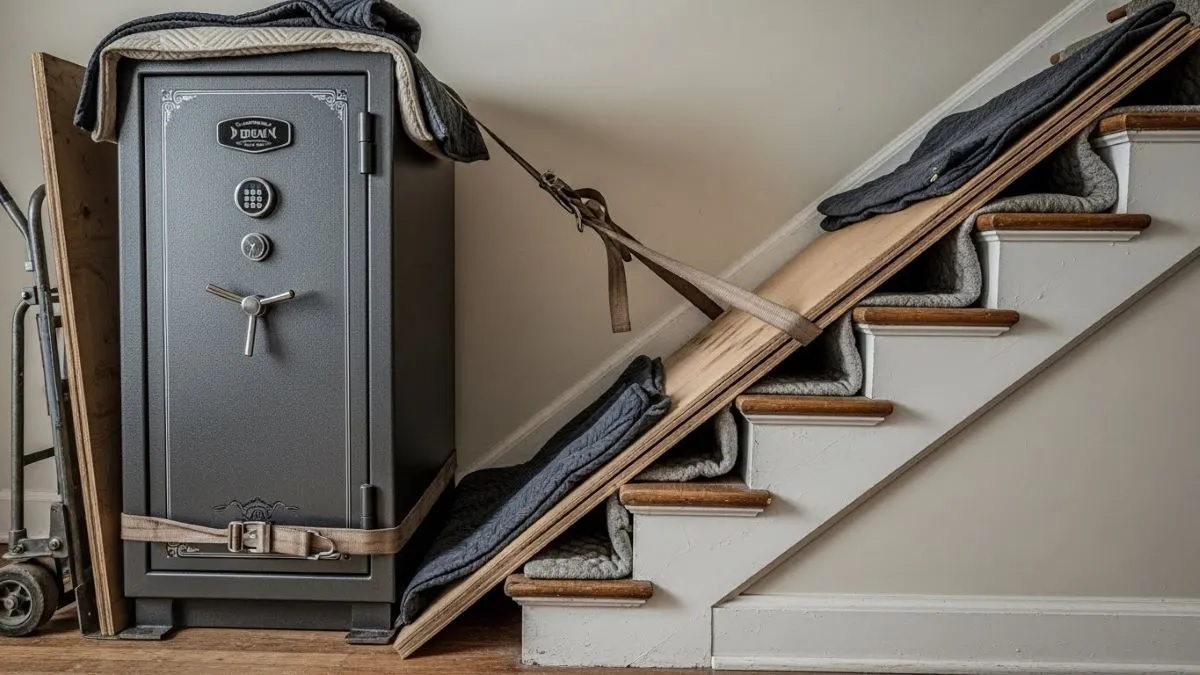
Using the right equipment makes the process much safer and more efficient. Heavy-duty appliance dollies, stair-climbing dollies, lifting straps, furniture sliders, and protective blankets help control the safe’s movement while minimizing strain on the people handling it. Protective coverings on walls, stair railings, and flooring also help prevent scratches, dents, and other property damage throughout the move.
Never attempt to move a large gun safe alone. Even smaller models can become difficult to control on stairs because of their concentrated weight. Having several experienced helpers or hiring professional safe movers significantly reduces the risk of injuries and accidental damage during transportation.
Secure the Safe After Installation
Once the gun safe reaches its upstairs location, position it carefully before making any permanent adjustments. Leave enough space around the safe so the door can open completely without contacting walls or furniture. Confirm that the safe sits level on the floor, as uneven placement may affect door alignment and locking performance over time.
Anchoring the safe is one of the final and most important installation steps. Many gun safes include factory-drilled anchor holes that allow you to bolt the safe securely to the floor. Proper anchoring prevents the safe from shifting during daily use and makes it much more difficult for burglars to remove the entire unit from your home. Always use the mounting hardware recommended by the manufacturer for the best results.
After installation, inspect the surrounding area to ensure the floor remains stable and there are no signs of excessive movement or stress. Test the locking mechanism, door operation, and interior organization before loading firearms and valuables. Careful installation, proper anchoring, and a final safety inspection help ensure your upstairs gun safe remains secure, stable, and ready for reliable long-term use.
Securing the Gun Safe Upstairs
Properly securing a gun safe upstairs is just as important as selecting the right location. A heavy safe provides excellent protection, but additional security measures reduce the risk of theft, tipping, and accidental movement. Combining strong anchoring, thoughtful placement, and regular maintenance helps ensure your firearms and valuables remain protected while preserving the structural stability of your home.
Anchor the Safe for Maximum Stability
Anchoring your gun safe is one of the most effective ways to improve its security. Most quality gun safes include pre-drilled mounting holes that allow you to secure the safe directly to the floor using manufacturer-recommended hardware. Proper anchoring prevents the safe from shifting during use and makes it significantly more difficult for burglars to remove the entire unit from your home.
The type of flooring beneath the safe also affects the installation process. Wood subfloors require different fasteners than concrete surfaces, so selecting the appropriate mounting hardware is essential. Following the manufacturer’s installation guidelines helps ensure the anchors provide maximum holding strength without damaging the surrounding structure.
A securely anchored safe also reduces the possibility of tipping when the heavy door is opened or when items inside are rearranged. This added stability improves both safety and long-term performance while giving you greater confidence that the safe will remain firmly in place.
Improve Security with Smart Placement and Maintenance
The location of your upstairs gun safe contributes to its overall security. Installing the safe in a private room, walk-in closet, or dedicated storage area keeps it out of sight from visitors and reduces the likelihood of attracting unwanted attention. Positioning the safe near a load-bearing wall not only supports the floor more effectively but also provides a stable foundation for long-term use.
Maintaining adequate clearance around the safe allows the door to open fully and makes it easier to access firearms, documents, and other valuables. Avoid placing the safe where furniture, shelving, or nearby walls interfere with normal operation. A well-organized surrounding area also allows you to inspect the safe regularly for signs of movement or structural concerns.
Routine maintenance helps preserve the safe’s security over time. Periodically inspect the anchor bolts to ensure they remain tight, test the locking mechanism for smooth operation, and examine the door seals and hinges for wear. Keeping the locking system clean and following the manufacturer’s maintenance recommendations helps ensure the safe continues to provide dependable protection while remaining securely installed on the upper floor for years to come.
People Also Asked
Can You Put A Gun Safe Upstairs?
Yes, you can put a gun safe upstairs in many homes, provided the floor is capable of supporting the combined weight of the safe and its contents. Modern residential floors are generally designed to handle normal household loads, but a large gun safe may require additional planning because of its concentrated weight.
Before installation, you should evaluate the safe’s total loaded weight, choose a suitable location near a load-bearing wall, and ensure the floor structure can safely support the load. Proper planning helps protect both your firearms and your home’s structural integrity.
How Much Weight Can An Upstairs Floor Hold For A Gun Safe?
The amount of weight an upstairs floor can support depends on your home’s construction, floor joists, building materials, and local building codes. A gun safe that weighs several hundred pounds when empty can become much heavier after you add firearms, ammunition, documents, and other valuables.
You should calculate the safe’s fully loaded weight rather than relying on its empty weight. Placing the safe where the load is distributed across multiple floor joists and near a load-bearing wall can improve structural support. Consulting a qualified contractor is a smart step when installing particularly heavy safes.
Where Is The Best Place To Put A Gun Safe Upstairs?
The best location is usually along a load-bearing wall where the home’s structural framework provides greater support. This placement helps distribute the safe’s weight more effectively and reduces stress on the floor. Choosing a private room, such as a bedroom, home office, or walk-in closet, also improves security by keeping the safe out of sight.
You should also leave enough clearance for the safe door to open fully and ensure there is adequate space for maintenance and organization. Selecting the right location improves accessibility while supporting long-term structural safety.
Should You Bolt A Gun Safe To An Upstairs Floor?
Yes, bolting your gun safe to the floor is highly recommended. Anchoring the safe prevents it from shifting during use, reduces the risk of tipping, and makes it much more difficult for burglars to remove the entire safe. Most quality gun safes include pre-drilled anchor holes specifically for secure installation.
You should use the mounting hardware recommended by the manufacturer and install it according to the instructions. Proper anchoring improves overall stability while maintaining the safe’s security and protecting both your firearms and your home.
Is It Safe To Move A Heavy Gun Safe Upstairs Yourself?
Moving a heavy gun safe upstairs without proper equipment can be dangerous. Gun safes are extremely heavy, and navigating stairs increases the risk of injuries, dropped equipment, and damage to walls, flooring, or staircases. Even experienced individuals can struggle to control the weight safely.
You should use heavy-duty moving equipment such as appliance dollies and lifting straps or hire professional safe movers. Professional movers have the experience and specialized tools needed to transport large safes safely while reducing the chance of property damage and personal injury.
Can A Gun Safe Damage An Upstairs Floor?
A properly installed gun safe normally will not damage a structurally sound floor. Problems can occur when an extremely heavy safe is placed in an unsupported area or when the floor cannot safely handle the concentrated load. Over time, excessive weight may contribute to sagging or structural stress.
You can reduce this risk by selecting an appropriate location near a load-bearing wall, distributing the weight across multiple joists, and verifying that the floor is suitable for the safe’s total loaded weight. Proper installation helps protect both the floor and the safe.
What Should You Check Before Putting A Gun Safe Upstairs?
Before installing a gun safe upstairs, you should check the safe’s total loaded weight, your home’s floor structure, the location of load-bearing walls, and the available access route. Measuring staircases, doorways, and hallways also helps ensure the safe can be moved into place without unexpected difficulties.
You should also consider anchoring options, floor protection, humidity control, and future accessibility. Taking time to evaluate these factors before installation helps you create a secure, stable, and practical storage solution that protects your firearms while preserving your home’s structural integrity.
Final Words
Choosing the right location for your gun safe is just as important as selecting the safe itself. If you have been wondering, can you put a gun safe upstairs, the answer depends on your home’s structural strength, the safe’s total weight, and how well it is installed. Taking these factors into account helps protect both your firearms and your property.
Before placing a heavy safe on an upper floor, verify the floor’s load capacity and position the safe near a load-bearing wall whenever possible. Proper anchoring and careful installation can improve security while reducing the risk of floor damage or movement over time.
Ultimately, can you put a gun safe upstairs is a question that requires careful planning rather than a simple yes or no. By evaluating your home’s construction, choosing the right safe size, and following safe installation practices, you can confidently create a secure and reliable storage solution that meets your long-term needs.